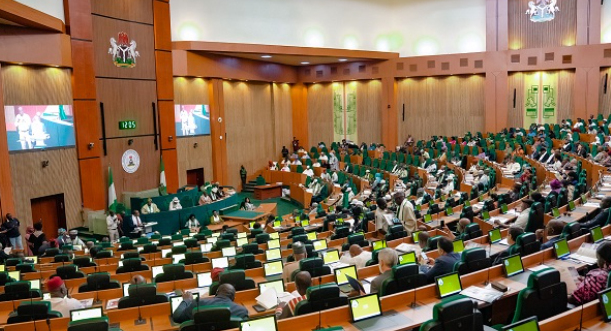
Nigeria’s House of Representatives has urged the Federal Government to reconsider its blanket invalidation of academic degrees obtained from Benin Republic and Togo, arguing that the policy unfairly affects legitimate graduates.
The call followed deliberations in the House of Representatives of Nigeria after lawmakers adopted a report from the Committee on Public Petitions examining complaints linked to the policy on Wednesday.
The lawmakers advised the government to replace the broad ban with a more targeted verification system that identifies fraudulent certificates without penalising genuine graduates.
In its resolution, the House recommended that authorities adopt a case-by-case screening process to verify foreign academic qualifications.
The members argued that this approach would help expose confirmed cases of academic fraud while protecting Nigerians who legitimately obtained degrees from accredited institutions in the two neighbouring countries.
The House also called on the Federal Ministry of Education Nigeria to strengthen collaboration with education regulators in Benin Republic and Togo.
According to lawmakers, closer cooperation would improve verification systems, reduce academic fraud, and ensure proper authentication of foreign qualifications.
The House further urged the government to launch a public awareness campaign to educate Nigerians about verifying foreign institutions before enrolling.
The lawmakers recommended that the National Orientation Agency and the Ministry of Information help inform citizens about accreditation requirements and the need to obtain equivalence certification for foreign degrees.
They also advised that any future policy decisions should be consistent with Nigeria’s bilateral and regional treaty obligations.
In January 2024, the Federal Government suspended the accreditation and evaluation of university degrees from Benin Republic and Togo.
The decision followed an undercover investigation that revealed how a journalist obtained a university degree in Benin Republic within two months and was subsequently mobilised for the National Youth Service Corps.
The Federal Ministry of Education said the discovery reinforced long-standing concerns about illegal institutions operating in the region and targeting Nigerians seeking quick academic credentials.
The ministry also said some Nigerians deliberately patronised such institutions to obtain certificates used for employment and national service eligibility.
The policy was defended at the time by former Minister of Education Tahir Mamman, who argued that the crackdown was necessary to protect Nigeria’s educational reputation.
He said several of the affected institutions had already been identified as illegal by authorities in the host countries themselves.
Despite that position, lawmakers now believe the blanket restriction may have unintended consequences for legitimate graduates, prompting their call for a more balanced verification system.