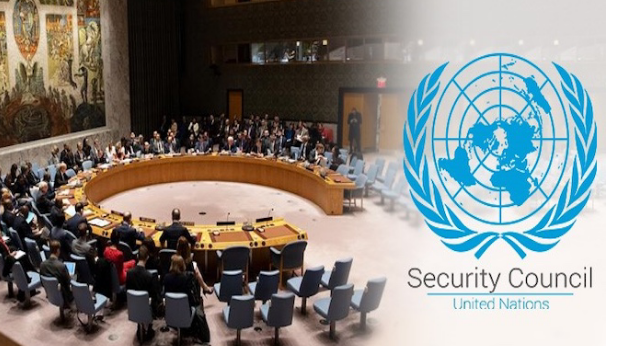
The United Nations Security Council has called on Iran to cease attacks on Gulf states, in a resolution passed by 13 votes with two abstentions from China and Russia.
Tehran’s ambassador condemned the resolution as a “blatant misuse” of the international body, criticizing its failure to reference U.S
or Israeli strikes.
The resolution demanded an immediate halt to all Iranian attacks on Bahrain, Kuwait, Oman, Qatar, Saudi Arabia, the UAE, and Jordan, and condemns any interference with navigation through the strategic Strait of Hormuz.
The UN vote coincided with a historic intervention by 32 member nations of the International Energy Agency (IEA), which agreed to release 400 million barrels of oil from strategic reserves to stabilize global supply.
IEA Executive Director Fatih Birol stressed that resuming tanker traffic through the Strait of Hormuz is essential for global energy stability, as attacks continue to damage infrastructure and disrupt production.
Amid the escalation, Iran’s new supreme leader, Mojtaba Khamenei, was reportedly lightly wounded during U.S.-Israeli strikes that killed his father, mother, wife, and a son.
He has not appeared publicly since assuming leadership, raising concerns about governance continuity in Tehran.
Financial institutions in the region have reacted swiftly. Citigroup and Standard Chartered began evacuating Dubai offices, while HSBC temporarily closed branches in Qatar, reflecting growing security concerns amid rising threats to U.S.- and Israeli-linked assets.
The regional conflict has also affected sports and commerce.
Iran announced it would not participate in the 2026 FIFA World Cup co-hosted by the U.S., Mexico, and Canada, citing security risks and political retaliation.
Meanwhile, selective passage of Bangladeshi-flagged oil tankers through the Strait of Hormuz was arranged to maintain critical energy flows.
In response to surging global fuel prices, the African Democratic Congress (ADC) in Nigeria called on the federal government to implement a temporary cap on petrol prices and introduce targeted support for low-income citizens.
The party criticised the government’s plan to distribute 100,000 CNG conversion kits as insufficient to address the broader energy crisis affecting over 11 million vehicles nationwide.
U.S. President Donald Trump signaled that military operations against Iran are ongoing, warning Tehran of further consequences, stating, “We’re not finished yet,” as Washington maintains pressure in the region