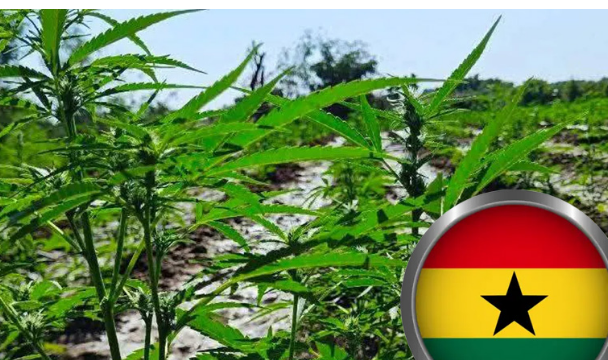
Ghana has formally legalised the cultivation of cannabis for industrial and medicinal purposes, following parliamentary approval of a comprehensive regulatory framework that allows licensed companies to operate under strict oversight.
The Parliament of Ghana passed the necessary legislation, establishing a licensing regime that enables qualified businesses to cultivate and process cannabis varieties with low tetrahydrocannabinol (THC) levels.
Government officials have emphasised that these strains are primarily intended for pharmaceutical manufacturing, fibre production, and other industrial applications.
Under the new framework, companies seeking to participate in the sector must obtain official licences and comply with stringent regulatory standards covering cultivation practices, security protocols, processing procedures, and export requirements.
The fficials have stressed that the regulations are designed to prevent misuse and ensure that cannabis products remain within the legal market.
The move is part of Ghana’s broader strategy to position itself as a competitive player in the global cannabis industry.
The officials have highlighted the economic potential of the sector, including attracting foreign investment, creating jobs in agriculture, pharmaceuticals, and manufacturing, and boosting the country’s export revenues.
“The new policy opens the door for qualified companies to engage in legal, regulated cannabis production while ensuring strict compliance with all regulatory requirements,” a government spokesperson said.
“Our goal is to develop a thriving industry that supports innovation, investment, and employment, while safeguarding public health and security.”
The licensing process has officially begun, with regulators inviting applications from eligible firms.
Observers noted that Ghana’s move could place the country among the emerging leaders in Africa’s medicinal and industrial cannabis market, joining other nations that have embraced regulated cannabis cultivation as a driver of economic growth.
The policy is also expected to foster research and development in pharmaceutical applications, particularly in producing medicinal products derived from low-THC cannabis strains.
Analysts said this could create opportunities for collaboration with international firms and academic institutions.
By legalising cannabis under a tightly regulated framework, Ghana aims to balance economic development with public safety, ensuring that the burgeoning industry contributes positively to the nation’s economy while avoiding the pitfalls of unregulated production.