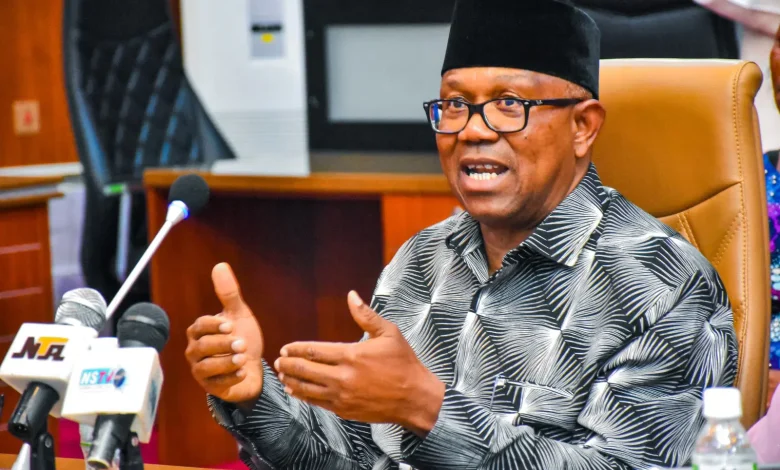
A media aide to Nigeria’s president has criticised remarks made by opposition figure Peter Obi regarding the rising cost of petrol in the country.
Dada Olusegun, who serves as Special Assistant on Social Media to President Bola Tinubu, said recent increases in fuel prices are largely driven by global economic forces rather than domestic policy failures alone.
Olusegun made the remarks on Saturday through a post on the social media platform X while responding to comments earlier made by Obi.
Obi raises concerns over fuel price surge
Obi, who was the presidential candidate of the Labour Party (Nigeria) in the 2023 general election, had expressed concern about the rising cost of petrol across the country.
The former governor argued that the sharp increases in fuel prices demonstrate how vulnerable Nigeria’s economy is to global shocks.
He attributed part of the problem to what he described as the country’s failure to establish a strategic petroleum reserve and insufficient long-term planning in the energy sector.
Aide links price rise to deregulation
Responding to the comments, Olusegun said the argument presented by Obi was misleading.
According to him, the most immediate reason behind rising fuel prices in Nigeria is the deregulation of the petroleum market following the removal of fuel subsidies by the Tinubu administration.
He explained that under a deregulated market system, the price of petrol is determined by several international factors, including global crude oil prices, foreign exchange rates, transportation costs, and geopolitical risks.
Olusegun added that countries dependent on imported refined petroleum products, such as Nigeria, are particularly vulnerable to fluctuations in global energy markets.
He noted that ongoing tensions involving Iran and other geopolitical developments have pushed global oil prices higher, affecting fuel prices in many parts of the world.
The presidential aide also disputed Obi’s suggestion that creating a strategic petroleum reserve would solve the issue of rising pump prices.
According to him, such reserves are typically used during emergencies such as wars, major supply disruptions, or international embargoes rather than for stabilising everyday fuel prices.
He cited examples of countries like the United States and China, which maintain large reserves primarily for supply security rather than routine market intervention.
Structural challenges highlighted
Olusegun said Nigeria’s main challenge lies in its long-standing dependence on imported refined petroleum products despite being a major crude oil producer.
He stressed that limited domestic refining capacity and exchange rate pressures have made the country highly sensitive to global price movements.
According to him, addressing the problem would require deeper structural reforms such as expanding local refining capacity, improving supply chains, stabilising the foreign exchange market, and maintaining consistent energy policies.
The exchange between both political figures comes at a time when global oil prices have risen sharply amid escalating tensions in the Middle East.
International benchmark Brent crude climbed above $100 per barrel, reflecting concerns over potential disruptions to global oil supply.
The rise in crude prices has had a direct impact on fuel costs in Nigeria’s deregulated market.
Meanwhile, the Dangote Petroleum Refinery recently adjusted its prices, increasing petrol at the gantry to ₦N1,175 per litre before later reducing it by N100 to N1,075 per litre.
Analysts said continued volatility in global energy markets could keep fuel prices unstable in the coming weeks.