A potential shift in leadership dynamics is emerging within the Ijaw Youth Council (IYC) Worldwide as a female contender has stepped forward to seek the council’s highest office, an unprecedented move in the organisation’s history.
For many years, the leadership of the IYC, a prominent socio-political youth body representing the interests of the Ijaw people across the Niger Delta region, has been dominated by male figures.
The council has traditionally been led by men who champion the agitation for environmental justice, resource control, and youth development in the riverine communities.
However, that long-standing tradition may soon face a historic test.
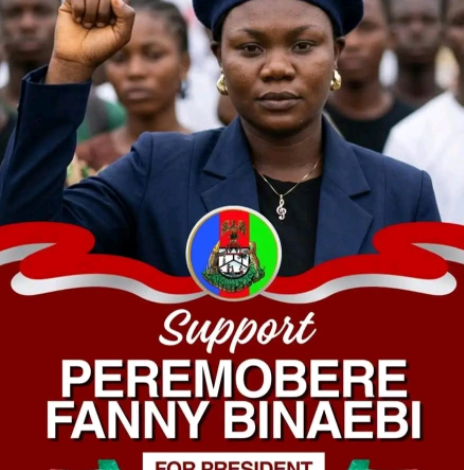
Comrade Peremoboere Binaebi, the current National Treasurer of the council, has formally indicated interest in contesting for the presidency of the organisation.
If successful, she would become the first woman to occupy the top leadership position of the IYC since its establishment.
Her decision to join the race has sparked conversations within Ijaw communities and among youth groups about gender inclusion and the evolving role of women in regional leadership.
Speaking on her aspiration, Binaebi emphasised that her ambition goes beyond politics.
According to her, it represents a broader call for recognition of the contributions Ijaw women have consistently made to the survival and development of their communities.
Across the waterways and settlements of the Niger Delta, women play crucial roles in sustaining family livelihoods.
From early morning fishing activities in the creeks to trading in busy local markets, they contribute significantly to the economic life of the region while often remaining outside the centre of decision-making.
Binaebi believes the moment has come for those voices to take a more active role in shaping the future of the Ijaw nation.
Her campaign message focuses strongly on the pressing challenges confronting young people in the oil-producing region.
Among these are environmental degradation caused by oil exploration, widespread unemployment among youths, and what many consider inadequate participation of local communities in the oil and gas industry operating on their ancestral lands.
While acknowledging the history of activism associated with the council, the aspiring president argues that the next phase of the struggle must include constructive engagement, policy advocacy and economic empowerment.
She has outlined several ideas aimed at strengthening the organisation and expanding opportunities for young people.
These include the establishment of youth technology hubs across Ijaw communities, deeper participation of clans within the council’s decision-making structure, and stronger advocacy for environmental responsibility by oil companies operating in the region.
Binaebi has also highlighted the need for unity within the council, calling for reconciliation among various factions in order to reposition the organisation as a stronger and more cohesive voice for Ijaw youths.
Observers said her entry into the race represents a symbolic turning point in the internal politics of the council.
For some, it signals a growing recognition that leadership within the Ijaw struggle may benefit from broader inclusion and diverse perspectives.
Regardless of the outcome of the election, many believe her declaration has already opened a new conversation about gender representation and leadership within the Ijaw movement.
In the meantime, political watchers across the Niger Delta will be observing closely as the race for the leadership of the Ijaw Youth Council unfolds, with the possibility of a historic breakthrough now firmly on the table.