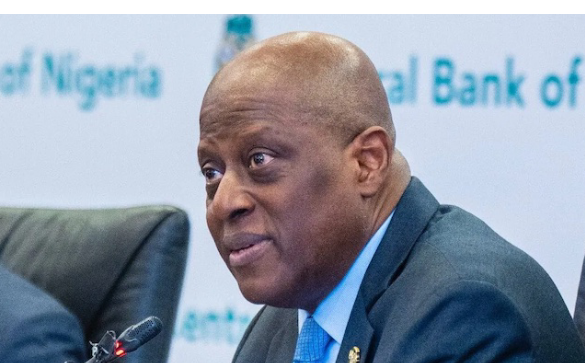
The ongoing monetary and financial sector reforms in Nigeria are strengthening the country’s resilience to external shocks and reinforcing investor confidence, according to Governor of the Central Bank of Nigeria (CBN), Mr. Olayemi Cardoso.
Speaking at the Africa Capital Forum on Wednesday, he highlighted measurable stability gains as policy discipline and structural adjustments take root.
The event, themed “From Stabilisation to Capital Mobilisation,” was jointly hosted by CBN and the UK’s Foreign, Commonwealth and Development Office (FCDO) at The Peninsula, London, on the sidelines of President Bola Tinubu’s state visit to the United Kingdom.
Cardoso revealed that foreign investors contributed about 28 per cent of total inflows into Nigeria’s ongoing banking sector recapitalisation programme, a clear signal of global confidence in the financial system.
He noted that disciplined policy measures and institutional reforms have “created stronger capacity to withstand shocks.”
The CBN governor emphasised improvements in the foreign exchange market, citing enhanced transparency and liquidity after the introduction of a new FX manual that simplified trade and investment processes by eliminating many previous capital controls.
Cardoso announced the finalisation of a Payments System Vision to position Nigeria as a regional leader in digital and cross-border payments.
He also reported that over 30 banks have now met the new capital requirements, with verification ongoing for the remainder, further solidifying confidence in the sector.
He highlighted a surge in diaspora remittances, which have diversified foreign exchange reserves and strengthened the country’s ability to withstand global volatility.
“Our focus is to protect the hard-earned stability we have accomplished so investors and stakeholders can plan with confidence,” he added.
The governor stressed CBN’s commitment to fostering innovation in Nigeria’s fintech sector, addressing regulatory bottlenecks, and promoting financial inclusion across Africa.
He underscored the importance of coordination between fiscal and monetary authorities, noting that the presence of fiscal representatives on the CBN Board and Monetary Policy Committee is critical for sustainable growth.
Cardoso confirmed that inflation has fallen sharply, exchange rate stability has improved, and ongoing reforms are positioning Nigeria for growth driven by domestic investment, oil sector reforms, and renewed global trust.
“We will continue to maintain stability, not only on inflation, but in the FX market, with transparency and consistent reporting,” he said.
He described Nigeria’s macroeconomic reforms as moving the country from stabilisation to capital mobilisation, making it “an economy to watch very closely” as the banking system strengthens and growth drivers deepen.
The forum drew praise from international partners. British Deputy High Commissioner to Nigeria, Jonny Baxter, said renewed investor interest should translate into long-term sustainable investments.
Odile Renaud-Basso, President of the European Bank for Reconstruction and Development (EBRD), hailed Nigeria’s potential for economic stabilisation and technology-driven growth.
Other participants, including Steve Gray of UKEF and Melis Ekmen Tabojer of EBRD, emphasized that recent reforms have enhanced transparency, attracted investors, and improved policy-making.
Chief executives of Nigeria’s leading banks, including First Bank, UBA, GTCO, FCMB, Access Bank, and Zenith Bank, lauded the reforms, noting that they have boosted confidence, enabled local project funding, and strengthened the overall financial system.
CBN Deputy Governors, Dr. Muhammad Sani Abdullahi and Mr. Philip Ikeazor, highlighted high reserves exceeding $50 billion, a stabilised FX market, declining inflation, and reforms designed to endure beyond the current administration.
The Africa Capital Forum explored three main pillars: Nigeria’s macroeconomic reset, strengthening the financial system, and mobilising global and diaspora capital.
The discussions sought to build stronger connections among Abuja, London, and the international financial community, while creating avenues for long-term capital mobilisation.
The CBN under Cardoso’s leadership continues to consolidate gains in inflation control, FX stability, bank recapitalisation, and policy consistency, laying the foundation for sustainable economic growth and renewed investor confidence.