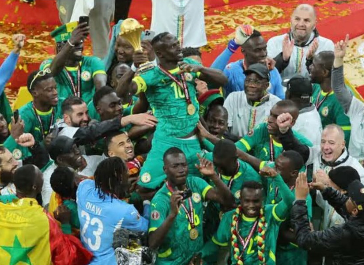
Senegal’s football authorities have vowed not to surrender the Africa Cup of Nations (AFCON) trophy following a controversial ruling by the Confederation of African Football (CAF) that stripped the West African nation of its title.
In a dramatic escalation, the Senegalese Football Federation declared its firm opposition to the decision, insisting that the team remains the rightful champion despite CAF’s verdict awarding the trophy to Morocco.
The dispute stemmed from the 2025 AFCON final played in Rabat, where Senegal initially secured a 1–0 victory after extra time.
However, CAF’s Appeals Board later overturned the result, ruling that Senegal had forfeited the match due to a temporary walk-off during stoppage time in protest against a penalty decision.
Following the ruling, CAF awarded Morocco a 3–0 default win, effectively handing them the continental title.
The decision has triggered widespread outrage across Senegal and beyond, with officials describing it as unjust and lacking legal foundation.
Senegalese authorities argued that the match had been completed under the supervision of the referee, who did not terminate the game or enforce a forfeiture at the time.
They maintained that, under football laws, the referee’s decision on the field should be final.
In defiance of CAF’s directive, Senegal’s football leadership has refused to return the trophy, signaling a deepening standoff between the nation and African football’s governing body.
The federation has also announced plans to challenge the ruling at the Court of Arbitration for Sport (CAS), seeking to overturn what it calls a “grossly unjust” decision.
The controversy has sparked intense debate across the football world, with critics questioning CAF’s authority to reverse an on-field result after the final whistle, while supporters of the decision argue that tournament regulations must be upheld.
As the dispute heads toward legal arbitration, the fate of the AFCON title remains uncertain, with both Senegal and Morocco claiming legitimacy in one of the most contentious episodes in African football history.