Global markets plunged Monday as escalating tensions between the United States and Iran rattled investors.
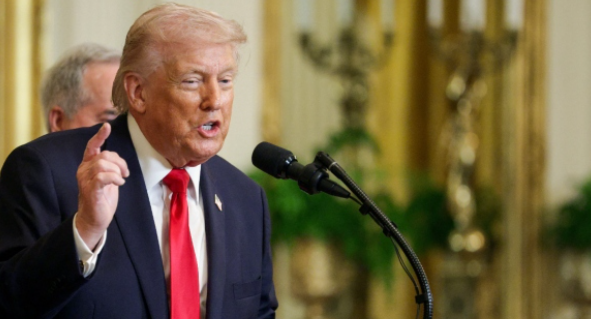
The drop came after U.S. President Donald Trump issued a 48-hour ultimatum demanding that Tehran reopen the Strait of Hormuz to international shipping, threatening to destroy Iranian energy infrastructure if his demand was not met.
Currency traders monitored exchange rates nervously as electronic screens displayed the fluctuating prices of WTI, Brent, and Dubai crude at the Hana Bank headquarters in Seoul on March 13, 2026.
Market turmoil followed the latest exchange of threats between Washington and Tehran.
The conflict, now entering its fourth week, shows no signs of abating.
The head of the International Energy Agency (IEA) warned Monday of the most severe global energy crisis in decades, describing the situation as a “major threat” to the world economy.
Analysts also flagged the risk of rising inflation, potential interest rate hikes by central banks, and disruptions to fertilizer exports, which could exacerbate global food insecurity.
On Saturday, President Trump gave Iran a strict 48-hour window to reopen the Strait of Hormuz, a vital passage responsible for transporting roughly a fifth of the world’s oil and gas.
The ultimatum followed Trump’s earlier statement that he was considering “winding down” U.S. military operations in the region, a move that contrasts sharply with his recent hardline stance.
Trump posted on Truth Social that the U.S. would “hit and obliterate” Iranian power plants, starting with the largest, if Tehran failed to comply by 23:44 GMT Monday.
This came a day after he dismissed the possibility of a ceasefire, asserting that the United States held the upper hand.
Iran responded defiantly, warning that the Strait would remain “completely closed” if the US acted on its threats.
Mohammad Bagher Ghalibaf, speaker of Iran’s parliament, further warned that hitting Iranian infrastructure would trigger irreversible damage across the region and cause oil prices to surge for an extended period.
The latest escalation coincided with Israel’s announcement of expanded ground operations in Lebanon against the Iran-backed Hezbollah group.
An Israeli military spokesperson indicated that the conflict could last “weeks” as the country braces for continued confrontations with Iran and Hezbollah.
The renewed tensions hit markets hard. Seoul’s Kospi fell as much as six per cent, while Tokyo’s Nikkei 225 dropped five per cent in early trading.
Hong Kong’s Hang Seng lost over three per cent and Shanghai, Taipei, and Manila each declined by more than two per cent.
Sydney, Singapore, and Wellington also saw steep losses.
The South Korean won weakened to 1,510 per dollar, marking its lowest level since 2009.
Oil prices climbed, with Brent crude hovering near $112 a barrel and West Texas Intermediate just under $100.
Chris Weston of Pepperstone commented: “The outcome of Trump’s ultimatum, especially if escalations occur, will carry significant implications for markets this week and into month-end.
While Trump has occasionally pulled back from the brink, he has also demonstrated willingness to act militarily when demands are unmet.
Global energy concerns intensify
IEA Executive Director Fatih Birol stressed: “The global economy faces a major, major threat today.
”Immediate resolution is critical. No country will be immune if the crisis continues.”
Central banks are already reassessing monetary policies as oil prices rise, with the Reserve Bank of Australia recently increasing interest rates.
The surge in borrowing costs has also put pressure on non-yielding assets like gold, which has now fallen for eight consecutive days.