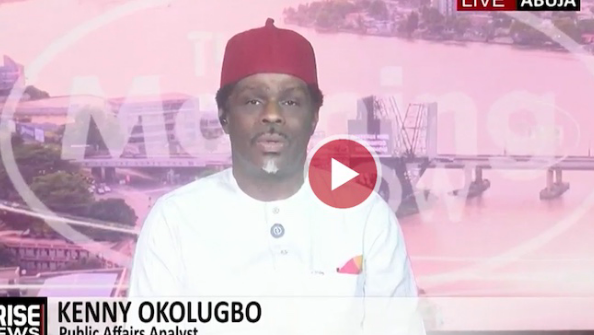
Political analyst, Kenny Okolugbo, has highlighted deep-seated challenges facing Nigeria’s major political parties as the country approaches conventions ahead of the 2027 general elections, pointing to unresolved disputes in the Peoples Democratic Party (PDP), consolidation efforts within the All Progressives Congress (APC), and emerging dynamics in the African Democratic Congress (ADC) as central to shaping the nation’s political trajectory.
Speaking in an interview with Arise News on Tuesday, Okolugbo analysed the PDP’s current turmoil.
“The PDP, it is very obvious that the advice from the Court of Appeal in Badu for reconciliation will not hold water.
”The party is moving ahead with conventions despite previous rulings against it,” he said, noting that internal democracy failures have contributed to the party’s decline.
He recalled that the PDP began with 14 governors but now has only two, reflecting a loss of influence over recent years.
“For some of us who were long-time supporters, we warned that lack of internal democracy would lead the party to this path,” Okolugbo said.
Turning to the APC, the analyst noted progress but acknowledged ongoing challenges.
“The APC has largely put its house in order, though much remains to be done.
”This will be the fifth convention since 2022, and leadership decisions will significantly influence the party’s trajectory,” he said.
Okolugbo drew parallels with the Republican Party in the United States, citing former President Donald Trump’s strategic leadership appointments.
“Leadership choices can transform a party’s fortunes. Consensus is often better for internal positions than contentious primaries,” he added.
Regarding PDP recognition and momentum, he said, “INEC will attend the convention, and the party will be recognised.
”The only way this could be stopped is if the Supreme Court rules otherwise.”
He however, noted that tensions remained between Governor Seyi Makinde and former River State Governor Nyesom Wike, making reconciliation unlikely.
“The differences between Makinde and Wike are irreconcilable. Makinde wants to run, but Wike supports President Bola Tinubu.
”There’s no way to reconcile that while ambitions clash,” Okolugbo observed.
Reflecting on the PDP’s 2020 primaries, he said dissatisfaction over zoning decisions, particularly the South-South region, continues to haunt the party.
“Governor Wike feels short-changed, and that legacy of internal disputes remains unresolved,” he noted.
On the ADC, Okolugbo highlighted emerging strategies and candidate alignments.
“The ADC can learn from the APC merger strategy. If former Vice President Atiku Abubakar steps aside and supports Governor Peter Obi, they could present a strong front,” he said.
He emphasised the role of Nigeria’s unwritten power-rotation agreements between the North and South.
“President Tinubu has served four years. The next southern candidate, potentially Peter Obi, may be best positioned to challenge for the presidency,” Okolugbo said.
He assessed the prospects of other aspirants, including Rotimi Amaechi, noting their limited influence compared to Obi’s electoral performance in the Southeast.
“Governor Peter Obi has consistently swept elections in his home region, making him a strong contender,” he said.
Okolugbo also analysed Atiku Abubakar’s age and strategy, noting he could still compete for the presidency in 2031 if circumstances allow.
“Age may not be on his side, but leaders like Clinton, Bush, and Trump have shown that age alone is not decisive. His window for electoral success is narrowing,” he said.
Reflecting on 2019, he said many leaders yielded the floor to respect regional quotas, allowing Atiku’s emergence, but similar considerations would influence the 2027 elections.
“The unwritten convention of regional rotation shapes expectations and strategy. Political patience and strategic sacrifices are essential,” he noted.
Okolugbo concluded that the ADC’s prospects depend on managing ambitions and forming strategic alliances.
“If Kwakwansu joins and honours a four-year term commitment, the party could gain credibility and a realistic path to contest 2031.
”But success hinges on managing internal ambitions carefully,” he said.