The United States Department of Defense has announced fresh agreements with major defence contractors to significantly increase missile production, amid growing concerns over depleted stockpiles in the ongoing Middle East conflict.
The move followed extensive deployment of interceptor systems by the United States, Israel and allied Gulf states in response to retaliatory strikes from Iran.
According to officials, the Pentagon has reached deals with Lockheed Martin and BAE Systems to ramp up production of “seeker heads,” a critical component of the Terminal High Altitude Area Defense (THAAD) system.
Output of the component is expected to increase fourfold, placing the defence industrial base on what authorities describe as a “wartime footing.”
Earlier projections by Lockheed Martin had already indicated plans to expand THAAD production capacity from roughly 100 units annually to about 400 in the coming years.
In a related development, the Pentagon confirmed a second agreement with Lockheed Martin to accelerate manufacturing of Precision Strike Missiles (PrSM), a newer generation of tactical ballistic missiles recently deployed in the conflict.
The company noted that the latest order builds on a multi-billion-dollar contract awarded by the U.S. Army in 2025.
A third deal involves Honeywell Aerospace, which w increase output of key navigation systems and other components essential to sustaining America’s munitions reserves.
The military build-up comes against the backdrop of stalled diplomatic efforts.
Iranian state media reported that Tehran has rejected a U.S.-backed proposal aimed at ending the war, signaling a hardline stance on ceasefire negotiations.
Quoting an unnamed senior official, state broadcaster Press TV said Iran dismissed the proposal and insisted it would determine the timing and conditions for ending hostilities.
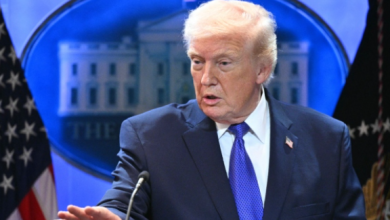
The official maintained that the conflict would conclude only when Iran deems it appropriate, not on terms set by former U.S. President Donald Trump, who is said to be linked to the proposal.
While there has been no formal statement from Tehran, reports indicate that Iranian authorities have outlined their own conditions for peace.
These include an end to attacks and targeted killings, guarantees against renewed military action by the United States and Israel, and compensation for wartime destruction.
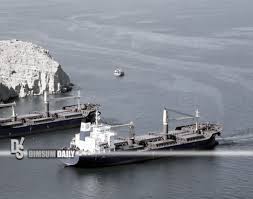
Additional demands reportedly cover a halt to hostilities across regional fronts, including groups aligned with Iran such as Hezbollah, as well as international recognition of Iran’s sovereignty over the strategically vital Strait of Hormuz.
Diplomatic efforts have continued behind the scenes, with Pakistan said to have relayed a 15-point proposal from Washington to Tehran in a bid to mediate the crisis.
Despite these efforts, the conflict now nearing a month, shows little sign of immediate resolution, as both military escalation and diplomatic deadlock persist.