The Federal Ministry of Budget and Economic Planning has begun close collaboration with the Federal Ministry of Finance to ensure that all 36 states sign the Subsidiary Loan Agreement, allowing them to participate in the $500 million World Bank-assisted HOPE Governance Programme.
The initiative is designed to enhance service delivery in basic education and primary healthcare at the subnational level.
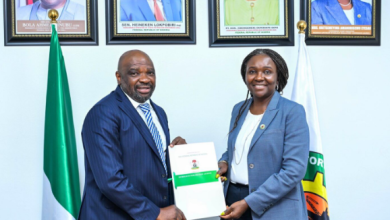
Dr. Deborah Odoh, Permanent Secretary in the Budget Ministry, disclosed this during a courtesy visit by the HOPE Governance team from the World Bank to her office.
“We have been strategising with the Federal Ministry of Finance with the involvement of our Honourable Minister, Senator Abubakar Atiku Bagudu.
”We will put in extra efforts to make it happen even faster, given the time constraints. We have a timeline drawn up recently to achieve this,” she said.
A statement by the Communications Officer of the HOPE Governance Programme, Joe Mutah, noted that the Permanent Secretary pledged full institutional support to ensure the program delivers measurable impact across the country.
“I’m glad we are having this meeting, which is long overdue and certainly we are here all the time. We expect to see more tangible results and impact shortly,” she added.
Earlier, Ikechukwu John Nweje, World Bank Task Team Leader for the HOPE Governance Programme, urged Dr. Odoh to leverage all available channels within the ministry to engage state governments and secure their signing of the Subsidiary Loan Agreement.
This step is crucial for states to access funds under the program, contingent on verification of Disbursement-Linked Results.
“However, you can help us to fast track these processes, this will really be appreciated to get this program up and running in terms of disbursement,” he said.
Nweje emphasised that governance is the main challenge affecting service delivery in basic education and primary healthcare.
The HOPE Governance Programme was therefore designed to strengthen governance structures, ensuring sectoral improvements can be achieved.
“If the governance part fails, we will continue to have the same problems we are having on the sectoral side.
”That is why the ministers prioritised governance because they found out that governance is the issue in the two sectors that will help to unlock the ability to deliver results,” he explained.
Dr. Assad Hassan, National Coordinator of the HOPE Governance Programme, said the meeting was intended to update the Permanent Secretary on milestones and challenges encountered during implementation.
The HOPE Governance Programme, domiciled in the Federal Ministry of Budget and Economic Planning, is a $500 million initiative supported by the World Bank aimed at promoting good governance in Nigeria’s basic education and primary healthcare sectors.