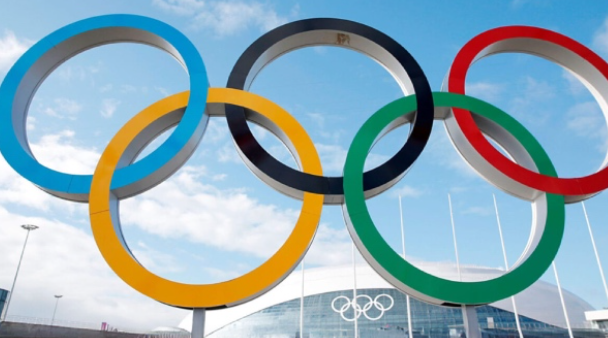
The International Olympic Committee (IOC) has announced a major policy shift, stating that eligibility for women’s events at the Olympic Games will now be limited strictly to biological females.
The decision, disclosed on Thursday, marks a return to gender verification testing, effectively barring transgender women from competing in female categories.
Under the new guidelines, the IOC said screening would be introduced ahead of the 2028 Los Angeles Olympics, where all women’s competitions would be restricted to athletes identified as biological females.
The policy woud also exclude athletes with differences in sexual development (DSD).
The move reverses the IOC’s 2021 framework, which allowed individual sports federations to determine their own eligibility rules.
The committee would now enforce a unified standard across all Olympic sports.
“Eligibility for any female category event at the Olympic Games or any other IOC event, including individual and team sports, is now limited to biological females, determined on the basis of a one-time SRY gene screening,” the IOC said in a statement.
According to the organisation, the test may be conducted through saliva samples, cheek swabs, or blood tests.
IOC President Kirsty Coventry defended the decision, saying it is grounded in scientific evidence and expert medical advice.
“The policy we have announced is based on science and has been led by medical experts,” she said.
“At the Olympic Games, even the smallest margins can be the difference between victory and defeat.
“So it is absolutely clear that it would not be fair for biological males to compete in the female category.
”In addition, in some sports it would simply not be safe.”
The decision followed controversy at the 2024 Paris Olympics, particularly in women’s boxing, where eligibility disputes drew global attention.
The row involved Algerian boxer Imane Khelif and Taiwan’s Lin Yu-ting, both of whom had earlier been excluded from the 2023 World Championships by the International Boxing Association (IBA) over failed eligibility tests.
Despite that, the IOC permitted both athletes to compete in Paris, describing their exclusion as a “sudden and arbitrary decision” by the IBA.
Both fighters went on to win gold medals at the Games.
Lin has since been cleared to compete in the female category at events organised by World Boxing, which will oversee the sport at the Los Angeles 2028 Olympics.
Gender testing in the Olympics dates back to 1968 but was discontinued after the 1996 Atlanta Olympics following criticism from the scientific community.
The IOC’s latest move signals a return to stricter eligibility rules in response to ongoing debates over fairness and safety in women’s sports.