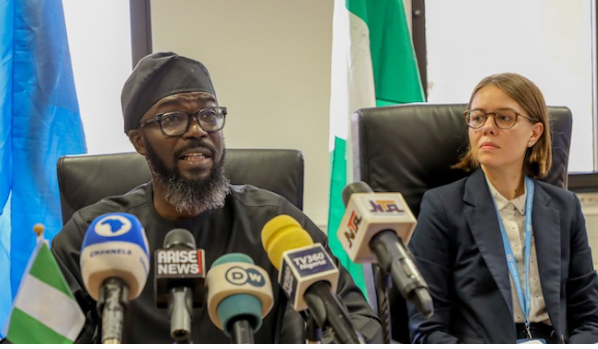
The United Nations Office on Drugs and Crime (UNODC) has launched a comprehensive Country Programme for Nigeria spanning 2026–2030, designed to strengthen the criminal justice system, combat organised crime, promote public health, and reinforce the rule of law across the country.
The programme was unveiled at a ceremony on Friday in Abuja, with officials highlighting its significance for Nigeria’s development and security.
UNODC Representative in Nigeria, Cheikh Toure, described the initiative as a crucial step toward integrating peace, justice, and development efforts in Nigeria, noting the country’s pivotal role as Africa’s largest economy and most populous nation.
“Nigeria stands at a defining moment. Its influence extends far beyond its borders, and addressing the challenges confronting its people is key to regional stability,” Toure said.
He highlighted persistent issues such as illicit drug trafficking, transnational organised crime, human trafficking, maritime insecurity, violent extremism, and corruption, stressing their ongoing impact on communities and institutions nationwide.
According to Toure, the programme is built on extensive consultations with government, civil society, and development partners, and it respects Nigeria’s sovereignty and institutional frameworks.
Key focus areas include strengthening the criminal justice system, combating corruption and illicit financial flows, supporting counter-terrorism and organised crime prevention, promoting public health, particularly prevention and treatment of drug use disorders, ensuring youth inclusion, gender equality, and the participation of persons with disabilities.
He emphasised the need for strong political commitment and sustained funding, urging collaboration among federal, state, and community stakeholders to achieve the programme’s objectives.
NDLEA Chairman Buba Marwa described the rise in drug abuse and trafficking in Nigeria as a serious public health and national security crisis.
He noted that the problem has grown in scale and complexity, fuelling violent crime, money laundering, and social instability, while posing severe health risks.
Marwa explained that the agency has adopted a new strategy combining intelligence-driven enforcement with prevention, rehabilitation, and counselling for drug-dependent individuals.
“This marks a shift from purely punitive measures to a more human-centred and restorative approach,” he said.
He added that the UNODC programme aligns with Nigeria’s priorities to implement data-driven interventions, strengthen institutional capacity, and adopt gender-sensitive strategies in addressing drug-related challenges.
“Success should not only be measured by the volume of drugs seized but by the number of lives saved and communities strengthened,” Marwa said, calling for collaboration among law enforcement agencies, healthcare providers, educators, and civil society organisations.
He commended UNODC for the initiative and reaffirmed NDLEA’s commitment to ensuring its effective implementation, stressing that collective efforts will be crucial in addressing the growing crisis.
The programme marks a significant milestone in Nigeria’s approach to crime prevention, justice reform, and public health, reflecting a shift toward more integrated and sustainable solutions for national development.