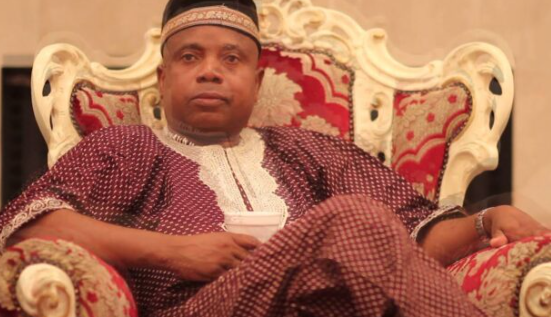
A United States-based family medicine physician and former founding member of the All Progressives Congress (APC), Dr. Austin Orette, has formally defected to the Nigeria Democratic Congress (NDC), alleging marginalisation of loyal party members and a collapse of internal democratic processes within the ruling party in Delta State.
Orette announced his defection while addressing journalists in Lagos on Tuesday, stating that the APC had effectively sidelined its founding members.
He maintained that the current structure of the party in Delta State no longer guarantees fairness, transparency, or equal participation.
“The All Progressives Congress (APC) wants the incumbent to hold the position without primary elections.
”In this wise, I can say I did not leave the ruling party. It was APC that left me,” he declared.
The Delta South senatorial aspirant further claimed that the increasing influx of defectors into the APC has created a political climate that is unfavourable to original members of the party, many of whom, he said, now struggle for relevance within its ranks.
Despite his grievances, Orette expressed personal admiration for Bola Tinubu, saying, “I love President Bola Tinubu. I wish him well.”
Framing the 2027 general elections as a battle of ideas and competence, Orette urged Nigerians to prioritise intellectual capacity and visionary leadership when electing representatives, particularly into the National Assembly.
“The Senate is the engine house of democracy. It is a place for the debate of ideas. In Nigeria, people who are not intellectually sound are allocated tickets in National Assembly elections,” he said.
Reflecting on his motivation for seeking public office, Orette recounted a tragic incident in his hometown, where a lack of adequate medical personnel allegedly resulted in the death of a woman.
He described the episode as a stark reminder of the urgent need to overhaul Nigeria’s healthcare system.
Outlining his development agenda, the medical practitioner pledged to drive economic empowerment through entrepreneurship, attract foreign investment, and equip local artisans with modern skills and tools to enhance productivity.
“I believe I can serve my people. I have been in this journey for long. I will make the people rich.
”I will attract a lot of foreign investments to the area.
”I will train citizens to be of service to others and open offices across Delta South,” he said, adding that he plans to transform Ogbe-Ijoh Market into a major commercial hub.
Orette also promised to address key infrastructure challenges, including electricity supply, healthcare delivery, and agricultural development.
He emphasised the need to strengthen agricultural extension services through the provision of modern equipment and improved support systems for farmers.
On governance, he criticised certain provisions of the 1999 Constitution, describing them as restrictive, and called for a restructuring of Nigeria to allow greater decentralisation of power.
“Uniformity does not build a country,” he said, advocating reforms that would empower local communities and better reflect the aspirations of Nigeria’s youth.
He further traced many of Nigeria’s systemic challenges to the legacy of prolonged military rule, arguing that its influence continues to shape the conduct of civilian leadership.
“The military brought Nigeria to this state. The military destroyed our institutions.
”Today, political actors exhibit behaviours akin to military rule. We need to demilitarise the mindset of our leaders,” he added.
As part of his proposals, Orette suggested the creation of a reserve army and the introduction of a six-month voluntary military training programme for young Nigerians, noting that such initiatives could strengthen national preparedness in times of crisis.
He warned against growing authoritarian tendencies, legislative inefficiency, and increasing public apathy, urging citizens and leaders alike to work collectively toward rebuilding democratic values and fostering a society anchored on equity, responsibility, and mutual respect.