The 2026 Lagos Fanti Carnival 2026 transformed Lagos Island into a vibrant hub of colour, music, and heritage on Easter Monday, drawing large crowds of revellers to Tafawa Balewa Square for the annual celebration.
Widely known as the Fanti Festival, the event honours the legacy of Afro-Brazilian returnees, commonly referred to as the Aguda who resettled in Lagos in the 19th century after returning from Brazil.
This year’s edition, themed “A Homecoming of Heritage,” underscored the enduring cultural connections between Nigeria and Brazil, while highlighting the need to preserve long-standing traditions.
The carnival attracted prominent dignitaries, including Lagos State Governor Babajide Sanwo-Olu, his wife Ibijoke Sanwo-Olu, and Deputy Governor Obafemi Hamzat, all of whom joined in celebrating the rich cultural heritage on display.
Festivities began early in the day with colourful processions from historic communities across Lagos Island, including Campos, Lafiaji, Isale-Eko, Olowogbowo, Okoo-Faji, Okepopo, and Epetedo.
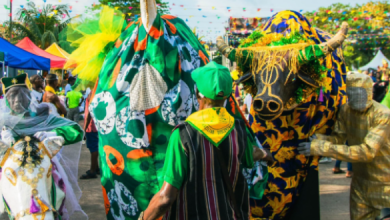
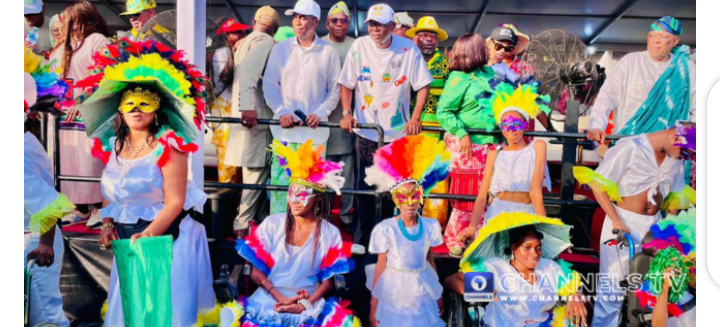
Participants adorned in elaborate costumes featuring beads, feathers, sequins, and traditional fabrics, paraded through the streets in a lively blend of Yoruba rhythms and contemporary Nigerian music.
The various processions converged at Tafawa Balewa Square, where the main event featured an array of cultural performances, including drumming, dance, and theatrical displays.
The atmosphere remained electric as each community showcased its heritage through carefully choreographed presentations.
Beyond its colourful displays, this year’s carnival placed strong emphasis on inclusiveness.
Performances by leading Nigerian artistes such as Niniola, 9ice, Terry Apala, Teni, and Reminisce added to the excitement, with fans treated to a mix of classic hits and recent releases.
The celebration also featured participation from the Disability Pride Movement, reinforcing the message that cultural expression is open to all.
Speaking on the initiative, disability advocate Olajumoke Otitoloju said the group’s involvement was aimed at promoting awareness and celebrating diversity.
She noted that children living with disabilities actively took part in the parade, demonstrating that culture transcends physical limitations.
According to her, the carnival remains “a long-standing cultural celebration introduced by Afro-Brazilian returnees,” and continues to unite communities, including visitors from abroad.
Otitoloju added that their continued participation reflected a broader message of inclusion, stressing that Lagos remains a diverse and accommodating society.
Community leaders also highlighted the deeper cultural significance of the festival. The captain of the Lafiaji community, Mayegun Owolabi, described the carnival as more than a celebration, calling it a strong expression of identity and heritage.
He revealed that preparations for the 2026 edition were extensive, reflecting the commitment of community members to preserving their traditions.
According to him, the event represents “cultural preservation rooted in history,” with practices maintained consistently over the years.
Owolabi also noted that the carnival fosters unity and peaceful coexistence, adding that its recognition in the Lagos State Government’s official calendar has enhanced its importance.
He also linked the community’s traditional colours to Easter celebrations, noting that participants were fully prepared to showcase their identity.
In the lead-up to the main event, a cultural summit was held at Glover Memorial Hall, where stakeholders discussed the economic potential of festivals, heritage preservation, and Nigeria-Brazil relations.
With strong participation and lively performances, the 2026 Lagos Fanti Carnival once again blended culture, unity, and creativity, reaffirming its place as one of the state’s most celebrated cultural events.