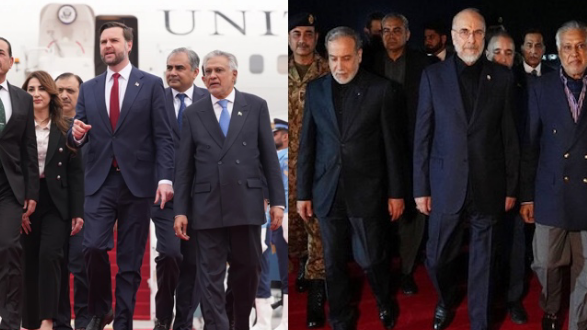
United States and Iranian negotiators have arrived in Pakistan for high-level peace talks aimed at stabilising a fragile ceasefire framework, amid deep mistrust, sanctions disputes, and wider regional tensions that continue to cloud the diplomatic effort.
Officials confirmed that both delegations reached Islamabad ahead of the discussions, which are being closely watched as a crucial test of ongoing attempts to reduce hostilities between the two adversaries.
U.S. Vice President JD Vance was formally received by Pakistan’s foreign minister upon arrival in the capital, shortly after Iranian representatives landed.
The near-simultaneous arrivals underscored the urgency and sensitivity surrounding the negotiations.
Observers have described the engagement as one of the most challenging diplomatic tasks of Vance’s tenure, with limited expectations of breakthrough and high political stakes should the talks collapse.
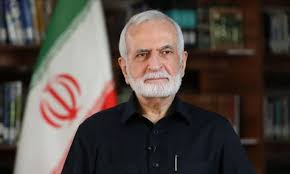
On the Iranian side, delegation leader Mohammad Bagher Ghalibaf struck a cautious tone, saying the team arrived with “good intentions” but added that they “do not trust” the United States.
His remarks reflected the deep-seated scepticism shaping Tehran’s approach to the discussions.
Vance, speaking ahead of the talks, warned that Washington would not engage constructively if Iran attempted to manipulate the process, stressing that the United States would not be receptive if Tehran tried to “play us.”
The Islamabad negotiations are the result of a recently brokered two-week ceasefire between the two countries, facilitated through behind-the-scenes mediation by Pakistan.
Officials familiar with the process said Islamabad acted as an intermediary, exchanging messages between both sides through what they described as a tightly controlled channel involving “a very small circle.”
Despite the tension, sources close to the talks described the atmosphere as “sombre and serious but still hopeful that a cessation of hostilities will be the outcome.”
However, major disagreements remain unresolved.
Key sticking points include the possible inclusion of Lebanon in any formal ceasefire arrangement, as well as ongoing disputes over sanctions relief and broader regional security guarantees.
In parallel diplomatic activity, Lebanese officials confirmed plans for separate talks with an Israeli delegation in Washington, adding further complexity to the already sensitive geopolitical backdrop surrounding the US-Iran engagement.
Pakistan’s role as mediator has drawn on its longstanding relations with Iran, with both countries sharing a border and often describing their ties as “brotherly.”
At the same time, Islamabad maintained strategically important relations with Washington, positioning it as a rare intermediary between the rival powers.
U.S. President Donald Trump has previously referred to Pakistan’s army chief, Field Marshal Asim Munir, as his “favourite” Field Marshal, noting his understanding of Iran and its regional dynamics.