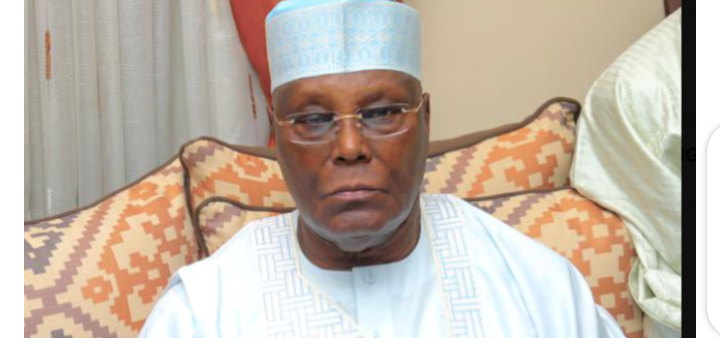
Former Vice President Atiku Abubakar has accused the Independent National Electoral Commission (INEC) of bias and interference in opposition party affairs, alleging that the commission is working to ensure President Bola Tinubu remains in power beyond 2027 “by all means.”
Atiku made the allegation during an interview with the British Broadcasting Corporation (BBC), insisting that INEC had taken actions that undermined opposition structures and judicial rulings.
“We are accusing them of, first of all, misinterpreting the law. We are also accusing them of bias… For sure, for sure,” he said.
He specifically claimed that INEC removed officials of the African Democratic Congress (ADC) from its portal despite court decisions affirming that internal party matters should not be controlled by external agencies.
“They ought not to have removed the officials of the ADC from the national electoral commission portal. They ought not to have done that,” Atiku added.
The former vice president described the situation as an attempt to entrench dictatorship through interference in both electoral and judicial processes, saying his concern was to protect Nigeria’s democracy.
“It’s been four decades that I’ve been involved in trying to make sure that democracy is established in this country. I fought the military and we succeeded,” he said.
“And after just less than three decades of democracy, then a political party is trying to completely overthrow what we have been able to achieve.”
He added that true democratic restoration would require “free, fair elections without government’s interference, and making sure that you have an impartial electoral umpire.”
On insecurity, Atiku accused the Tinubu administration of failing to tackle terrorism and banditry effectively, alleging possible collusion and weak coordination of security forces.
“We suspect that there is collusion. The terrorism is to intimidate people, particularly farmers, businessmen. You cannot travel.
”There is no security everywhere in the country,” he said.
Atiku also defended his public service record, saying he was never convicted of corruption.
“I took the president to court 11 times and I won. There was never a time I was convicted of any corruption,” he stated.
He expressed optimism that Nigerians would elect better leaders in 2027 and said his own role in politics may be transitional, aimed at mentoring younger leaders.
Former Speaker of the House of Representatives and ex-Sokoto State Governor, Aminu Tambuwal, also intensified criticism of the current administration, calling on Nigerians to “rescue” the country from what he described as oppression, poverty, and insecurity.
Speaking at a gathering of African Democratic Congress (ADC) supporters in Sokoto after state congresses, Tambuwal said the government had failed to meet public expectations.
“This administration has only been able to deliver much more insecurity, poverty, and hunger,” he said.
He further alleged mismanagement of public resources and warned of attempts to influence future elections through financial power.
“There is gross mismanagement and diversion of public resources as well as securing of more loans, which will be deployed during the 2027 elections,” Tambuwal added.
He said Nigerians had suffered worsening economic hardship, adding that unemployment and inflation had deepened under the current government.
“Most Nigerians would reject continued mis-governance,” he said.
Tambuwal also framed the 2027 elections as a political struggle between citizens and the ruling party, urging opposition members to mobilise at the grassroots.
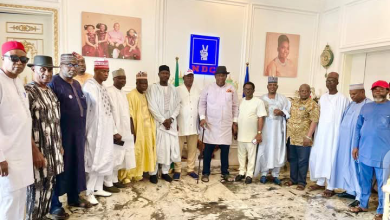
Meanwhile, the African Democratic Congress (ADC) is moving ahead with plans for its national convention scheduled for April 14 in Abuja.
The party has nominated prominent political figures including Atiku Abubakar, Peter Obi, Rabiu Kwankwaso, and Rotimi Amaechi to oversee preparations.
Committee is being chaired by former Cross River State Governor, Liyel Imoke, with Tambuwal serving as deputy chairman.
Other members include former Kaduna State Governor Nasir El-Rufai, former Attorney General Abubakar Malami, Senator Eyinnaya Abaribe, Emeka Ihedioha, Sam Egwu, John Odigie-Oyegun, Pat Utomi, Achike Udenwa, and others.
The party is expected to use the convention to ratify its National Working Committee, reportedly led by former Senate President David Mark as National Chairman and former Minister Rauf Aregbesola as National Secretary.
The ADC has continued to expand its internal structure across the country following a series of state congresses held over the weekend.
In a statement signed by party spokesman Bolaji Abdullahi, the party congratulated newly elected state executives, describing the process as evidence of internal democracy and discipline.
It said the inauguration of new officials is scheduled for May 12, 2026, or a later date to be announced.
The party urged its new leaders to remain committed to unity, discipline, and strengthening the ADC nationwide.
Wider Opposition Concerns Over Democracy
A civil society group, Opposition Watch Nigeria (OWN), also raised concerns over what it described as systematic efforts to weaken opposition parties ahead of the 2027 general elections.
The group alleged that legal disputes and internal divisions are being used to destabilise opposition structures, warning that Nigeria risks sliding into a one-party system.
It called on citizens and the international community to defend democratic institutions and ensure fair political competition.
The ADC also concluded congresses in several states, producing new executives through consensus arrangements.
In Sokoto and Nasarawa, party leaders were elected via delegate affirmation, while in Osun State, Issa Adesiji emerged as chairman, with Lani Baderinwa as secretary.
In Ondo State, former PDP officials took over key ADC positions following their defection, reflecting ongoing realignments within opposition politics.
The developments highlight rising political tensions ahead of the 2027 elections, with opposition leaders accusing the ruling administration of weakening democratic institutions, while the ADC intensifies internal restructuring and national mobilisation efforts.