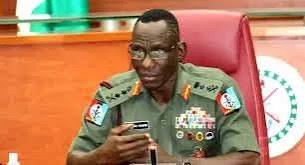
Former Chief of Defence Staff, General Lucky Irabor (rtd), says intelligence findings show that certain political actors in Nigeria are contributing to the financing of terrorism across the country.
Speaking on Channels Television’s Politics Today on Monday, Irabor said some politicians exploit insecurity for political mileage, including creating crises to discredit governments or portray themselves as more capable leaders.
Asked directly whether politicians fund terrorist groups, he responded: “Some politicians.”
Irabor also addressed public concerns about the government’s refusal to release names of alleged terrorism financiers.
He confirmed that many individuals have been interrogated by security agencies but stressed that the identities remain classified.
“It’s not information for public consumption,” he said, urging Nigerians to trust the security institutions handling the investigations.
He added that it is wrong to assume that officials handling security matters are dishonest or unserious.
Irabor said Nigeria still suffers from significant deficits in personnel, equipment, and operational capacity — issues he believes must be urgently addressed.
He noted that the recent surge in violent attacks is not entirely new, but appears more severe because criminal groups now operate with improved tools and external support, enabling them to inflict greater harm.
“Over time, we thought we were on the winning side,” he said. “But suddenly it seems the gains have reversed — and that is deeply worrying.”
The former defence chief warned that extremist ideologies linked to Boko Haram and ISWAP remain active in several communities.
He reiterated that deradicalised former insurgents cannot be drafted into the military under any circumstances.
November witnessed a series of major security breaches across northern and central Nigeria, including the kidnapping of over 300 students and teachers in Niger State, the abduction of 25 schoolgirls in Kebbi, the kidnapping of worshippers from churches in Kwara and Kogi, and the seizure of several women travelling for a wedding in Sokoto.
Irabor said the pattern underscores the need for a unified national security strategy, rather than fragmented regional responses.