Northern governors urge urgent investment in first 2,000 days of children’s lives

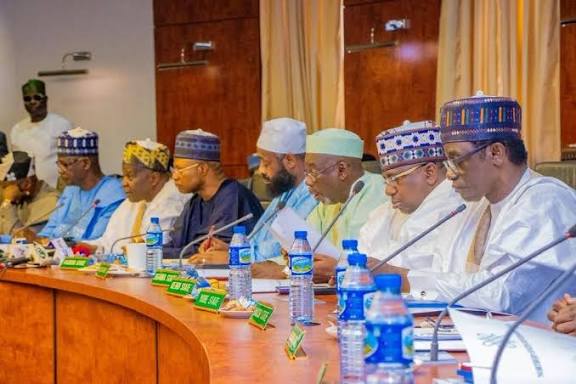
The Northern Governors Forum (NGF) has reached a consensus on the critical need to invest in the first 2,000 days of children’s lives.
The forum emphasised that early interventions from conception to around age five are essential for long-term health, learning, and productivity.
The forum, which convened for a joint emergency meeting in Kaduna on Monday and Tuesday, hosted representatives from the World Bank to discuss strategies for strengthening early childhood development in the region.
Dr. Ritgak Tilley-Gyado, Team Lead for Stunting and Early Years at the World Bank, outlined the demographic, economic, and service-delivery imperatives for prioritizing the early years.
She highlighted the importance of adequate nutrition, early learning, child development, and responsive caregiving during this critical period, which lays the foundation for lifelong outcomes.
Dr. Tilley-Gyado explained that World Bank support is channeled through the Human Capital Development Core Working Group (HCD-CWG), coordinated by the Office of the Vice President.
The CWG engages federal ministries, state governments, and development partners to align evidence, policy options, and delivery pathways for a robust early years program nationwide.
In her presentation, Tilley-Gyado stressed the importance of preventing stunting, supporting early stimulation, and strengthening family systems to empower women and promote positive parenting.
She described strong early childhood outcomes as a strategy not only for human development but also for economic growth and social stability, particularly in regions facing high population pressures.
Dr. Mathew Verghis, World Bank Country Director for Nigeria, emphasized that states bear the largest responsibility for program delivery and are therefore central to shaping nationally coherent yet locally grounded approaches.
He noted that achieving early years outcomes requires multisectoral collaboration across health, nutrition, education, WASH, women’s empowerment, agriculture, and social protection sectors.
The forum saw active participation from several governors. Gov. Umar Namadi of Jigawa highlighted the strong link between poverty and poor early childhood outcomes, commending the World Bank’s results-based instruments.
Gôvernor Umaru Bago of Niger stressed the importance of locally produced fortified and biofortified foods, while Gôvernor Caleb Mutfwang of Plateau acknowledged the complexity of multisectoral initiatives and pledged to strengthen evidence-based delivery systems.
Gôvernor Dauda Lawal of Zamfara noted that while many challenges were legacy issues, decisive early years investments could significantly change the region’s trajectory.
Gôvernor Inuwa Yahaya of Gombe praised the state’s strong partnership with the World Bank.
The governors collectively agreed that investing in the first 2,000 days is the single most important strategy for ensuring peace, productivity, and sustainable economic growth in northern Nigeria.
They stressed that the Early Years agenda must reflect local realities, support frontline workers, and demonstrate committed leadership.
“The region cannot afford to miss another generation,” the governors said. “We are ready to take leadership and shape the future of this critical initiative.”