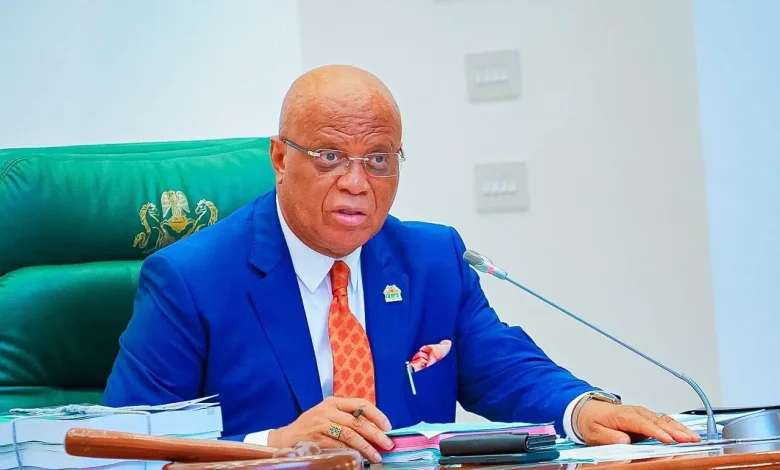
Akwa Ibom State has been officially recognized as the cleanest state in Nigeria for 2025, achieving an impressive overall score of 79 percent, according to the State of the Nigerian Environment Report (STONE) 2025.
Mr. Ene Owoh, National Coordinator of Clean-Up Nigeria, revealed the findings in an interview with the News Agency of Nigeria (NAN) in Abuja on Wednesday.
Akwa Ibom received the prestigious Unbroken Green Crystal Award Trophy and the Medal of Service Award, marking the eighth consecutive year the state has held the top position, from 2018 through 2025.
Owoh, who also served as Secretary of the National Technical Study Group (NTSG), explained that the rankings were determined through comprehensive assessments conducted during the STONE 2025 evaluation and the Cleanliness Performance Index Ratings of all 36 states and the Federal Capital Territory.
According to the report, Ebonyi and Enugu states secured the second and third positions, with overall scores of 65 percent and 56 percent, respectively.
“The six geopolitical zones of Nigeria also produced standout states in terms of cleanliness.
”In addition to Akwa Ibom in the South-South region, Enugu led the South-East with 65 per cent, Lagos topped the South-West at 48 percent, Bauchi emerged for the North-East at 50 per cent, Plateau led the North-Central with 52 per cent, and Kaduna scored highest in the North-West at 35 per cent, ” the report said.
Owoh listed the nine cleanest states in the country as Akwa Ibom, Enugu, Ebonyi, Bauchi, Plateau, Cross River, Anambra, Lagos, and the Federal Capital Territory.
The study, led by a 15-member NTSG under the leadership of Prof. Solomon Balogun, was carried out from November 2024 to November 2025.
It combined physical inspections of towns and states weighted at 20 per cent with satellite imagery analysis, accounting for 80 percent of the scoring.
Five core variables were evaluated: street and road cleanliness, vegetation and drainage control, waste management services, public opinion (POP), and citizens’ knowledge, attitudes, and practices (KAP) regarding hygiene and sanitation.
While progress was noted in certain areas, challenges persist. The report indicated that government procurement of waste management equipment increased by 8 percent in 2025.
However, the health of sanitation workers declined from 31 percent in 2024 to 28 percent in 2025, and sanitation-related diseases rose from 29 percent to 43 per cent during the same period.
Also, the overall hygiene and sanitation practices of Nigerians fell to 32 percent in 2025 from 36 percent in 2024.
Open defecation decreased from 24 percent to 19 percent, yet Nigeria remains the second-highest globally in this metric.
Satellite imagery data further revealed that approximately 187.2 million of Nigeria’s estimated 240 million residents live in unclean environments.
“The life expectancy of the average Nigerian has dropped from 50 years in 2024 to 47 years in 2025,” Owoh said.
He called on government authorities at all levels to boost funding for waste management and urged citizens to prioritize hygiene and sanitation in their daily lives.
Owoh also emphasised the importance of constructing more public toilets to curb open defecation and recommended the establishment of health and environment clubs in schools nationwide to raise awareness among young people.
Expressing Clean-Up Nigeria’s commitment to collaboration, he encouraged partnerships with both governmental and private sectors to enhance cleanliness standards across the country.
Owoh further commended Senator Oluremi Tinubu, wife of the President, for her green initiative projects and called on the Tinubu administration to adopt a broader green agenda encompassing urban planning, energy research, the green economy, and sustainable resource management.