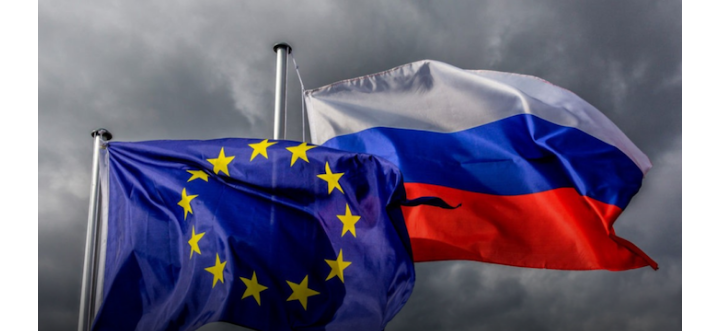
Russia has strongly condemned the European Union’s plan to use €210 billion (£185 billion) of Russian assets frozen in the EU since the start of its full-scale invasion of Ukraine in February 2022.
Most of the funds were held by Belgian bank Euroclear. European leaders intend to deploy the money as a loan to help Kyiv cover military and economic needs.
The Russian Central Bank announced it is suing Euroclear in Moscow, arguing that using Moscow’s frozen assets for Ukraine is illegal.
Russian officials described the EU move as theft and warned that repurposing the assets undermines international financial norms.
Ukraine estimated it would require €135.7 billion ($159 billion) over the next two years to sustain its defence and recovery.
Europe aimed to cover roughly two-thirds of this sum.
Ukrainian President Volodymyr Zelensky called it fair for Russia’s frozen assets to be used to rebuild what Russia destroyed, while German Chancellor Friedrich Merz said the funds would help Ukraine defend against further Russian attacks.
EU officials stressed that European financial institutions are legally protected from Russian court action.
Belgium, hosting the majority of the assets, has expressed concerns about potential liabilities if the plan fails.
Euroclear CEO Valérie Urbain warned that using the funds could destabilise the international financial system.
Belgian Prime Minister Bart De Wever set strict conditions for approval and did not rule out legal action if the plan posed “significant risks.”
Previously, the EU had limited the use of frozen Russian assets to paying windfall profits to Ukraine, which amounted to €3.7 billion in 2024.
Urgency has increased as international military aid to Ukraine declined in 2025, partly due to reduced U.S. funding under President Donald Trump.
Two main EU proposals aim to provide €90 billion to Ukraine:Raising funds on capital markets backed by the EU budget (Belgium’s preferred option, but requiring unanimous approval, complicated by Hungary and Slovakia’s objections), using a loan from Russia’s frozen assets, largely held in cash by Euroclear via the European Central Bank.
The European Commission has proposed guarantees to protect Belgium, ensuring any loss to Euroclear or Belgian financial exposure would be offset.
EU ambassadors agreed to immobilise Russia’s central bank assets indefinitely under Article 122 of the EU Treaties, removing the previous six-month renewal requirement.
The freeze would remain as long as there is an “immediate threat to the economic interests of the union” or until Russia pays war reparations to Ukraine.
Swedish Finance Minister Elisabeth Svantesson called the move “an important step in enabling more support for Ukraine and protecting our democracy.”
Despite opposition from some EU members, including Hungary and Slovakia, several countries near Russia—such as the Baltic states, Finland, and Poland—support using the frozen assets as the most viable financial solution.
German MP Norbert Röttgen warned that failure to act would leave Europe with few alternatives.
Meanwhile, potential U.S. plans to repurpose some of Russia’s frozen funds could be complicated by the EU’s indefinite freeze, requiring approval from a majority of EU member states.
Hungarian Prime Minister Viktor Orban criticised the plan, arguing it replaces the rule of law with bureaucratic discretion.
As EU leaders prepare for next week’s summit, the indefinite immobilisation of Russia’s assets is expected to be a decisive step in ensuring Ukraine receives the financial support needed to sustain its war effort and post-war recovery.