West African leaders hold Abuja summit as coups, insecurity heighten regional tensions

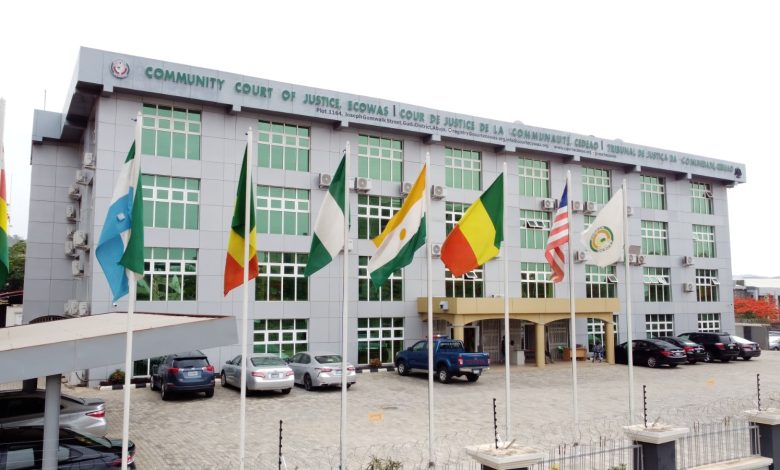
Presidents, vice presidents and senior government officials from across West Africa converged in Abuja on Sunday for a high-level regional summit held against the backdrop of renewed political instability and security concerns across the subregion.
The meeting of the Economic Community of West African States (ECOWAS), hosted at the State House Conference Centre, was originally scheduled as part of the bloc’s regular engagements.
However, recent events notably a successful military takeover in Guinea-Bissau in November and an attempted coup in the Republic of Benin just a week earlier, moved issues of unconstitutional change of government to the top of the agenda.
Opening the summit, ECOWAS Commission President Alieu Touray said developments in recent weeks had underscored the importance of regional cooperation and collective responsibility.
He noted that the bloc’s response to political crises demonstrated the practical meaning of solidarity among member states.
West Africa has witnessed repeated military interventions in politics in recent years.
Between 2020 and 2023, coups occurred in Burkina Faso, Guinea, Mali and Niger, all of which remain under military rule.
These takeovers have significantly strained ECOWAS, challenging its commitment to democratic governance and regional stability.
According to the summit programme, leaders were expected to deliberate on the findings of a recent ECOWAS mission to Guinea-Bissau, as well as assess the security and political situation in Benin following the foiled coup attempt.
”Discussions were also scheduled on trade liberalisation initiatives and updates on Guinea’s ongoing transition process, ” he said.
Beyond political instability, security in the Sahel region featured prominently in deliberations. Jihadist insurgencies continue to intensify in Burkina Faso, Mali and Niger, threatening to spread further south.
The three countries, now under military rule, have withdrawn from ECOWAS and formed a new bloc known as the Alliance of Sahel States (AES).
Last week, Touray publicly advocated dialogue between ECOWAS and the AES, stressing the need for cooperation in addressing shared security challenges.
This position was reinforced at the summit by Sierra Leone’s President Julius Maada Bio, the current chairman of ECOWAS, who warned that violence does not respect national borders and that instability in one country poses risks to the entire region.
Notably absent from the Abuja gathering were the leaders of Guinea and Guinea-Bissau, both of whom remain suspended from ECOWAS following their countries’ military takeovers.
Nigeria’s President Bola Tinubu also did not attend the meeting, delegating representation to Vice President Kashim Shettima.
In addition to military coups, concerns were raised about democratic backsliding in civilian-led states.
Observers pointers to recent elections in Côte d’Ivoire, where President Alassane Ouattara secured a fourth term amid the exclusion of opposition contenders, as an indication of deeper governance challenges in the region.
As West African leaders continue deliberations, the summit reflects the growing urgency for coordinated political, security and economic responses to safeguard democracy and stability across the subregion.