Yiaga Africa warns against spike in campaign spending, calls for level political playing field

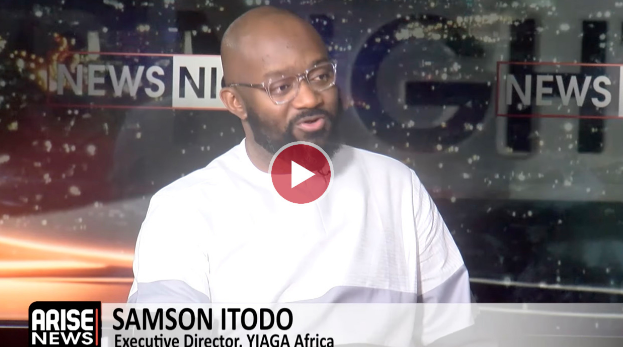
Samson Itodo, Executive Director of Yiaga Africa, has raised concerns over a proposed amendment to Nigeria’s Electoral Act that seeks to increase campaign spending limits for political candidates.
Itodo warned that the move could deepen inequality, restrict political participation, and entrench plutocracy in the country.
Speaking during an interview with Arise News on Friday, Itodo criticised the House of Representatives’ decision to raise the campaign finance ceiling for presidential candidates to N10 billion, while also significantly increasing limits for governorship, senatorial, and House of Representatives contests.
He also argued that the proposed limits would exclude economically marginalised Nigerians from contesting public office, concentrating political power in the hands of the wealthy few.
“When you peg campaign expenditure at such high levels, you effectively close off the political space to a section of society.
“This promotes unfair competition and reinforces a system where public office is determined by the highest spender rather than merit,” he added.
While acknowledging that N10 billion is a conservative estimate of what presidential campaigns typically cost in Nigeria, he noted that the figure remains dangerously high and has broader implications for governance.
Excessive campaign spending, he said, often fuels corruption, with elected officials prioritising the recovery of campaign expenses through patronage, contracts, and tax waivers to political sponsors.
“The cumulative effect is the erosion of democratic ideals. What we end up with is a plutocracy, not a democracy,” Itodo said, emphasising that public office should be accessible to all Nigerians regardless of economic standing.
Itodo further highlighted the historical challenge of enforcing campaign finance rules, noting that violations have rarely been punished.
“During the 2015 and 2019 elections, the ruling party admitted to exceeding the N5 billion presidential campaign limit, yet no action was taken,” he said.
Despite his criticism, Itodo welcomed aspects of the electoral amendment, particularly the introduction of compulsory electronic transmission of results, calling it a step forward for transparency.
He however, cautioned that legal provisions alone were insufficient without clear implementation guidelines from the Independent National Electoral Commission (INEC).
“Citizens must understand exactly how electronic transmission works, and manuals and guidelines must leave no room for confusion,” he said.
Addressing INEC’s involvement in internal party disputes, notably within the Peoples Democratic Party (PDP), Itodo said the commission is unfairly drawn into conflicts that should be resolved internally by parties themselves.
He maintained that INEC should only act in accordance with the law and defer to court rulings when factions present conflicting claims.
“Once a court determines the legitimate faction, INEC has no option but to comply,” he said.
Itodo noted that the combination of high campaign spending limits and weak enforcement risks undermining democratic principles, while reforms such as electronic result transmission offer limited but meaningful progress toward a more transparent electoral process.