U.S. Forces carry out airstrikes on ISIS targets in Nigeria following Trump’s directive

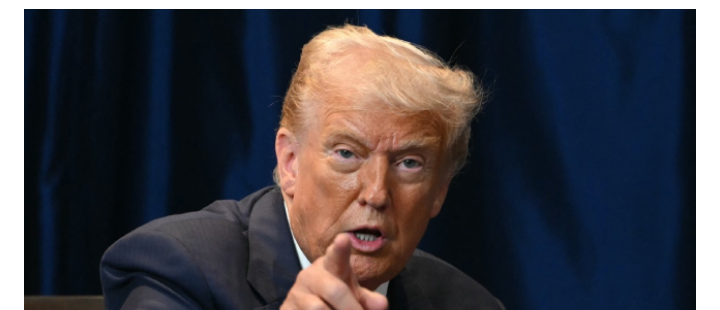
The United States military has confirmed carrying out airstrikes against Islamic State (ISIS) elements operating in northwestern Nigeria, following an order by President Donald Trump.
The operation, conducted on Christmas Day, marked the first direct US military action in Nigeria under Trump’s current administration.
According to statements from Washington, the strikes were described as “powerful and deadly” and were aimed at degrading the operational capacity of ISIS-linked fighters in the region.
The U.S. Department of Defense said the action resulted in the deaths of “multiple ISIS terrorists,” though it did not disclose specific casualty figures or details of the targets hit.
President Trump announced the operation in a message posted on his Truth Social platform, saying the strikes followed earlier warnings to the militant group to halt attacks, particularly those targeting Christian communities.
He stated that the military action was a response to continued violence and reiterated his administration’s readiness to act against groups it views as responsible for religious persecution.
U.S. Africa Command (AFRICOM) later confirmed that the strike took place in Sokoto State and was carried out at the request of Nigerian authorities.
The command said the operation was conducted in coordination with the Nigerian government, underscoring existing security cooperation between both countries.
U.S. Defense Secretary Pete Hegseth also welcomed the development, praising the preparedness of American forces and expressing appreciation for Nigeria’s cooperation in the counterterrorism effort.
The strikes come after months of heightened rhetoric from President Trump, who in October and November sharply criticised Nigeria’s handling of insecurity, claiming that Christians in the country were facing an existential threat.
While some observers welcomed Washington’s renewed attention to Nigeria’s security challenges, others warned that framing the violence primarily along religious lines could deepen existing tensions in a country with a history of sectarian conflict.
Nigerian authorities and several independent analysts have consistently rejected the portrayal of the country’s insecurity as solely religious persecution, pointing instead to a complex mix of terrorism, banditry, criminality, and governance challenges affecting communities across religious and ethnic lines.
Despite this, the United States recently redesignated Nigeria as a country of “particular concern” over religious freedom issues and has imposed restrictions on visa issuance to Nigerian citizens.
The airstrikes have drawn international attention to Nigeria’s ongoing battle with extremist groups, particularly in the northwestern region, where armed groups have expanded their activities in recent years.
Nigerian officials have since confirmed that the operation formed part of broader, intelligence-driven counterterrorism cooperation with international partners.
As security operations continue, both governments say their shared objective remains the disruption of terrorist networks while strengthening Nigeria’s capacity to address its internal security challenges.