Trump imposes 25% tariffs on Iran’s trade partners amid protests …While U.S. cancels 100,000 visas in first year of second term

The United States has escalated its hardline foreign and domestic policies under President Donald Trump’s second term, imposing steep economic measures on Iran while simultaneously revoking a record number of visas.
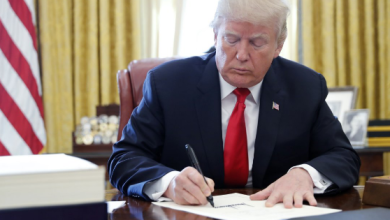
President Trump announced on Monday that a 25 per cent tariff would be imposed on any country that continues to trade with Iran while maintaining commercial ties with the United States.
The move comes amid weeks of nationwide protests in Iran, which have resulted in one of the most severe challenges to Tehran’s leadership in decades.
Human rights organisations estimated that hundreds, possibly thousands, of demonstrators have been killed in the crackdown.
The White House said the tariffs were part of a broader strategy to confront Iran economically while signalling support for diplomatic engagement.
Although no official list of affected countries has been released, Iran’s key trading partners—China, Turkey, the United Arab Emirates, and Iraq could face significant economic pressure.
The protests in Iran, now in their third week, began over worsening economic conditions but have evolved into a wider challenge to the legitimacy of the clerical leadership.
Despite a near-total internet blackout and lethal crackdowns, demonstrations continued across major cities.
The Norway-based group Iran Human Rights (IHR) reports at least 648 verified deaths, including children, and warns that actual fatalities may exceed 6,000.
About 10,000 protesters have reportedly been detained, though independent verification remains difficult.
Iranian authorities have accused foreign powers, including the United States, of orchestrating the unrest—a claim Washington denies.
Supreme Leader, Ayatollah Ali Khamenei described the protests as a failure of the movement, warning against U.S. interference.
Meanwhile, indirect communications remained open between U.S. and Iranian officials, suggesting some room for negotiation despite the mounting tensions.
Meanwhile, the Trump administration has implemented an unprecedented surge in visa revocations.
Since his second-term inauguration on January 20, 2025, the U.S. State Department has cancelled over 100,000 visas, more than double the figure recorded in 2024.
Officials cited national security, enforcement of U.S. laws, and alignment with foreign policy objectives as key reasons behind the policy.
Thousands of revocations were linked to criminal activity, including assault and driving under the influence.
Student visas were particularly affected, with around 8,000 cancelled, including cases where foreign nationals participated in protests opposing U.S. foreign policy interests.
The administration has also intensified visa application screening, including monitoring social media activity, as part of a broader immigration crackdown.
Since Trump’s return to office, over 605,000 people have been forcibly deported, with an additional 2.5 million undocumented migrants leaving voluntarily.
Experts warned that Trump’s simultaneous foreign and domestic measures could have wide-ranging economic, diplomatic, and geopolitical consequences.
Countries maintaining trade ties with Iran may face difficult choices between economic partnerships and access to the US market.
Domestically, the visa cancellations and immigration enforcement have already raised legal and humanitarian concerns, particularly for students and families affected by the policy.
The U.S. administration maintained that these policies—both the Iran tariffs and visa revocations—reflect a renewed focus on safeguarding American interests, national security, and global influence, reinforcing President Trump’s signature hardline approach during his second term.