Diri directs boost in Bayelsa rice output …. Approves N200m monthly support for farmers

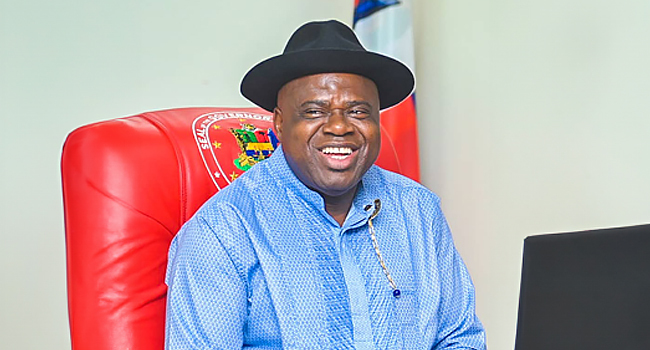
Governor Douye Diri of Bayelsa, has issued a firm directive to the Commissioner for Agriculture and Natural Resources to significantly scale up the production of locally grown rice, popularly known as Made-in-Bayelsa rice, with a clear target to be achieved before the end of 2026.
The governor gave the directive on Tuesday at the state-owned rice farm in Otuasega community, Ogbia Local Government Area, during the official flag-off of the 2025/2026 dry farming season.
He expressed displeasure over the volume of rice harvested in the previous farming season, noting that despite the state government’s substantial investment and support for farmers, Bayelsa still had to source rice from outside the state during the last Yuletide.
Diri stressed that the continued importation of rice into the state was unacceptable, especially given Bayelsa’s agricultural potential.
He said the state possessed a comparative advantage in several crop areas, adding that its soil was naturally fertile and capable of producing organic crops without heavy reliance on fertilisers.
While acknowledging the efforts of the Commissioner for Agriculture and other stakeholders for organising the event, the governor warned that such activities should not be reduced to ceremonial annual gatherings.
He emphasised that agricultural programmes must translate into tangible benefits for the people and directly improve their livelihoods.
According to him, agriculture remains a critical pillar of the state’s economic diversification agenda, which his administration has pursued deliberately through increased funding and policy support.
He called on civil servants and residents of the state to actively engage in farming, describing agriculture as a culture that must be embraced collectively.
Diri also highlighted the link between infrastructure development and agricultural growth, explaining that ongoing investments in roads and bridges were designed not only to connect rural communities but also to ease the movement of farm produce to urban markets, particularly the state capital.
In a major policy announcement, the governor disclosed that his administration had approved a monthly grant of N200 million to support farmers across the state.
He also approved a request to convene a meeting with farmers and directed that essential inputs such as seedlings, herbicides and pesticides be provided to enhance productivity.
Addressing the recurring issue of herdsmen encroaching on farmlands, the governor reiterated that Bayelsa’s anti-grazing law remained in force.
He cautioned traditional rulers against allocating forest land to herders, warning that anyone found complicit would face sanctions.
He urged farmers to report incidents of crop destruction to security agencies rather than resorting to social media.
The governor further charged the Commissioner for Agriculture to identify genuine farmers in the state, assuring them of sustained government support.
He stated that the same level of financial intervention previously extended to micro, small and medium enterprises would now be replicated in the agricultural sector.
He set a clear production benchmark, directing that by the end of 2026, Bayelsa should be producing at least 300,000 kilogrammes of rice, stressing that government would prioritise purchasing locally produced rice for its programmes instead of sourcing from outside the state.
In his remarks, the Commissioner for Agriculture and Natural Resources, Professor Beke Sese, described the event as a demonstration of the state government’s unwavering commitment to achieving food security.
He praised governor Diri for his sustained investment in agriculture, noting that such support had been instrumental to the progress recorded so far in the sector.
Representatives of key agricultural stakeholders, including the All Farmers Association of Nigeria (AFAN), Bayelsa State chapter, Nigerian Women in Agricultural Business, the Nigerian Agricultural Insurance Corporation and the Central Bank of Nigeria, also commended the governor.
They acknowledged that the administration’s policies and financial backing had significantly strengthened agricultural activities and boosted farmers’ confidence across the state.