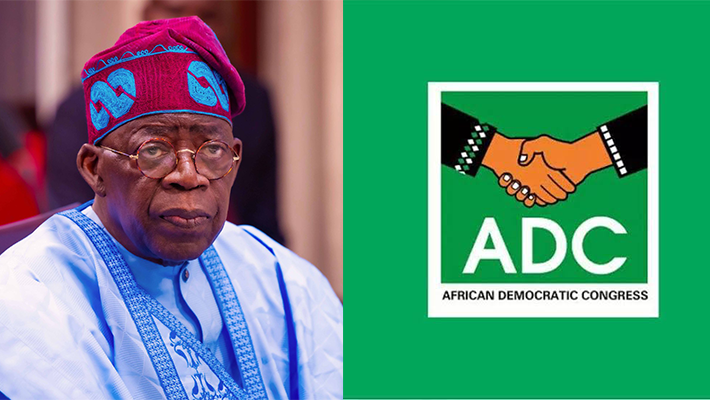
Nigeria’s worsening economic conditions and rising insecurity have sparked a sharp exchange between opposition and ruling party figures, highlighting the deep divide in perceptions of governance under President Bola Tinubu.
A chieftain of the African Democratic Congress (ADC), Dr. Ladan Salihu,
blamed the All Progressives Congress (APC) administration for escalating poverty, unemployment, and the rising cost of living, describing recent reforms as heavy burdens on ordinary Nigerians.
Speaking in an interview with Arise News on Tuesday, Salihu dismissed claims of economic progress, calling them “disconnected from the harsh realities Nigerians face daily.”
He cited official statistics, noting that multidimensional poverty has risen from 43 percent in 2014 to more than 141 million people today.
“Poverty levels have worsened significantly over the past decade.
“A responsible government should confront these figures honestly rather than offer excuses. These numbers represent real people struggling every day, ” he said.
Salihu specifically criticised the removal of the fuel subsidy, highlighting its impact on transportation costs.
“In 2014, a trip from Kano to Abuja cost N1,500. Today, it ranges between N13,000 and N15,000,” he said.
He also raised concerns about public financial management, referencing a 2025 audit showing N17 trillion spent by the Nigerian National Petroleum Company Limited, with N8.6 trillion allegedly used to cover price gaps.
The ADC chieftain further criticised President Tinubu’s frequent foreign trips during national crises, arguing that leadership presence is crucial when citizens are at risk.
“You have a president abroad while dozens of Nigerians are being killed.
“In two years, a government should make an impression. Nigerians cannot continue dying in poverty while being told to wait for reforms to work, ” he said.
Responding to these criticisms, APC chieftain and Executive Secretary of the National Institute of Cultural Orientation (NICO), Otunba Biodun Ajiboye, defended the administration, describing the claims as “extremely insincere” and a misrepresentation of the country’s long-standing systemic challenges.
“A country as beautiful as Nigeria does not collapse in a day. Let us trace the history of this collapse across successive governments,” Ajiboye said.
He attributed the nation’s economic difficulties to years of fiscal mismanagement, including excessive money printing and forward-selling of oil.
He argued that the Tinubu administration’s reforms were necessary to avert total economic collapse.
“Without these measures, we could have faced a Sri Lanka-type crisis. You cannot clean up decades of mismanagement in just two years,” he said.
Ajiboye dismissed allegations that recent tax policies target the poor, insisting the reforms aim to strengthen state revenue and governance.
He also highlighted tangible achievements, including the distribution of over 2,000 tractors for agriculture, student loan disbursements, free dialysis in some government hospitals, and gas-powered vehicles to ease transportation challenges.
On security, Ajiboye credited the administration’s diplomatic engagement with foreign partners for improved cooperation in counterterrorism operations, including intelligence-sharing and support from the United States.
“It took negotiation and intelligence to transform allegations into action. The Americans came, investigated, and are now supporting our operations. That is leadership,” he said.
He defended the president’s foreign travels, saying international engagement is essential for attracting investment and strengthening Nigeria’s economy.
“You cannot run a country sitting in one place. Engaging globally brings investors and opportunities,” Ajiboye explained.
He stressed that the administration is tackling Nigeria’s problems at their roots rather than applying short-term fixes.
“You don’t treat malaria by managing symptoms. You eliminate the mosquitoes. Until we solve fundamental issues, the symptoms will continue,” he said.
The exchange underscores a deep divide in public perception, with opposition figures demanding immediate relief for citizens, while the ruling party insists long-term reforms and structural adjustments are necessary to stabilize the economy and security situation.