Ugandan opposition figure Bobi Wine taken away by military helicopter after tense polls

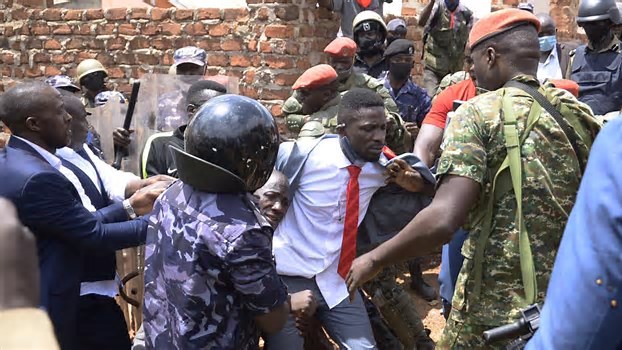
Uganda’s leading opposition figure, Robert Kyagulanyi Ssentamu, widely known as Bobi Wine, was taken from his residence by security forces on Friday, a day after a highly contested general election marked by violence, heavy security deployment and an internet shutdown.
The National Unity Platform (NUP), Wine’s party, said soldiers arrived at his home in an army helicopter and forcibly removed him to an undisclosed location.
According to the party, Wine’s private security aides were assaulted during the operation.
Earlier in the day, the 43-year-old former musician had reported that he was under house arrest, with police and military personnel surrounding his compound in Kampala following Thursday’s vote.
President Yoweri Museveni, who has ruled Uganda since 1986, is seeking another term in office.
Preliminary results released by the Electoral Commission on Friday showed Museveni leading comfortably with 73.7 per cent of the vote, compared with Wine’s 22.7 per cent, with about 81 per cent of ballots counted.
Final results were expected on Saturday afternoon.
The election took place amid an internet blackout imposed by authorities earlier in the week, further fuelling allegations of repression and lack of transparency.
Wine has accused the government of widespread ballot stuffing and violent attacks on opposition officials carried out under the cover of the shutdown.
Reports of election-related violence also emerged from other parts of the country. In central Uganda’s Butambala district, Muwanga Kivumbi, a lawmaker from Wine’s party, told AFP that security forces stormed his home and killed 10 of his campaign agents.
His wife, Zahara Nampewo, a law professor, said the victims had been hiding in their garage when security personnel opened fire.
Kivumbi alleged that after the shooting, soldiers removed the bodies, leaving behind only pools of blood.
However, police offered a different version of events. Local police spokeswoman Lydia Tumushabe said the individuals were part of a group planning to attack and burn a tally centre and police station.
She said an unspecified number were “put out of action,” while 25 others were arrested and charged with malicious damage to property.
Election observers and analysts have long described the vote as largely predictable, citing President Museveni’s firm grip on state institutions and the security apparatus.
A former guerrilla leader who took power nearly four decades ago, Museveni has consistently subdued political opposition.
Election day itself was disrupted by logistical and technical challenges, including malfunctioning biometric voter verification machines and delayed delivery of ballot papers in several areas.
The streets were heavily militarised throughout the country.
Last week, the United Nations human rights office warned that the polls were taking place in an atmosphere characterised by intimidation and repression of opposition voices.
As tensions remained high and the whereabouts of Bobi Wine remain unclear, attention has shifted to how authorities will respond to mounting domestic and international scrutiny over the conduct of the election and the treatment of opposition leaders.