Seplat Energy says routine gas flaring eliminated, calls for responsible oil operations

Seplat Energy Plc has reaffirmed its commitment to responsible and sustainable oil and gas operations, announcing that it completed all projects required to eliminate routine gas flaring across its onshore assets in 2025.
The company made the disclosure at a high-level climate roundtable held in Lagos and organised by the Nigerian Exchange Group (NGX Group) in collaboration with DEG, Germany’s development finance institution, and Africa Foresight Group (AFG).
The forum brought together key stakeholders to discuss climate action, energy transition and sustainable financing.
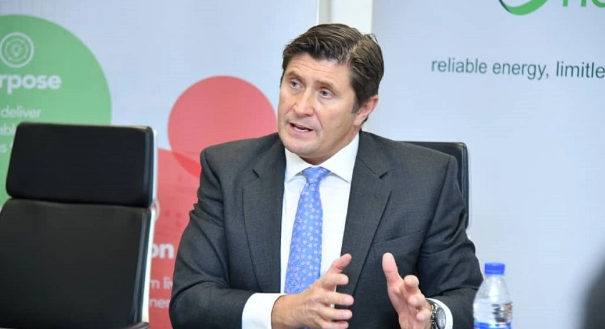
Speaking at the event, Seplat Energy’s Chief Executive Officer, Mr Roger Brown, represented by the company’s Director of Gas and New Energy, Mr Okechukwu Mba, said the oil and gas sector must focus less on debates about its relevance and more on how operators conduct their activities responsibly.
Brown emphasised that oil and gas would continue to play a vital role in Nigeria’s energy mix for the foreseeable future.
He stressed that the central issue is ensuring that industry players operate efficiently, minimise environmental impact and contribute positively to society and the economy.
According to him, responsible operations must go beyond policy statements and be backed by measurable actions such as improved operational efficiency, reduced emissions and credible carbon offset strategies.
As part of these efforts, Brown said Seplat Energy has deployed advanced technology to improve environmental performance, including real-time monitoring systems that track emissions across pipelines, valves, processing plants and other critical infrastructure.
These systems, he explained, were supported by a strong asset integrity programme designed to quickly identify and eliminate emission sources.
He disclosed that the company began a comprehensive programme several years ago aimed at ending routine gas flaring in all its onshore operations.
By the end of 2025, all projects required to achieve this goal had been completed and are currently in the commissioning phase.
“Very soon, we will be in a position to state clearly that routine flaring has ended in our onshore operations.
”This represents a major milestone in our environmental stewardship, while we continue to meet Nigeria’s energy needs,” Brown said.
Routine gas flaring refers to the continuous burning of associated natural gas produced alongside crude oil during normal production, rather than capturing or reinjecting it.
It is a major source of greenhouse gas emissions in oil-producing regions.
Beyond reducing emissions from its operations, Seplat Energy is also pursuing nature-based solutions to offset its carbon footprint.
Brown revealed that the company has launched an afforestation initiative in one of its host communities in Edo State, committing to plant millions of trees over a five-year period.
The first phase of the project has already been completed.
He also highlighted the company’s investments in gas and liquefied petroleum gas (LPG) infrastructure as a key part of its broader decarbonisation strategy.
Expanding access to LPG, he noted, helps reduce dependence on firewood, charcoal and other biomass fuels, particularly in rural and peri-urban communities, thereby lowering deforestation and household emissions.
Following Seplat Energy’s recent offshore acquisition, Brown said LPG volumes that were previously exported have now been redirected to the domestic market, improving availability, affordability and overall quality within Nigeria.
Addressing the wider energy transition challenge, Brown stressed the urgent need for financing, especially for gas and gas-to-power projects.
He pointed out that Nigeria currently generates only about five gigawatts of electricity from the national grid, forcing households and businesses to rely heavily on petrol and diesel generators, which produce significantly higher emissions.
“If we replace these inefficient and polluting power sources with gas-powered energy, the decarbonisation gains would be substantial.
However, without adequate financing, such projects cannot move forward and the benefits will remain unrealised,” he said.
The climate roundtable also marked the official launch of the NGX Net-Zero Programme (N-Zero), an initiative aimed at helping listed companies define credible net-zero pathways, improve climate-related disclosures and align with global investor standards.
The programme is projected to unlock between $2.5 billion and $3.1 billion in climate-linked capital for Nigerian businesses.
Speaking at the launch, NGX Group Chairman, Dr Umaru Kwairanga, said Africa’s capital markets must play a central role in driving climate action and sustainable economic growth.
He noted that the N-Zero Programme would help companies move beyond climate pledges to concrete, measurable outcomes.
Also speaking, the Group Managing Director of NGX Group, Mr Temi Popoola, said climate risk has become a key consideration in global investment decisions, influencing both company valuations and capital allocation.
In her remarks, Ms Monika Beck, a member of DEG’s management board, said the partnership reflects DEG’s strategy of mobilising private capital to accelerate climate action while delivering tangible development impact.