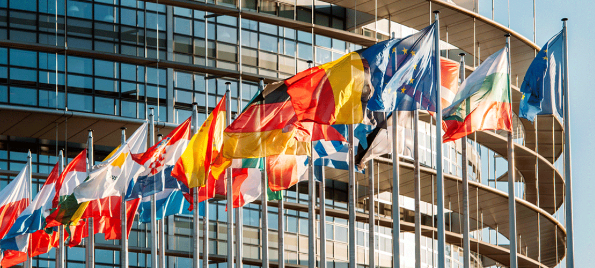
European Union leaders convened urgent crisis discussions on Sunday following an announcement by U.S. President Donald Trump that he intends to impose a 10 per cent tariff on imports from several European countries unless the United States is allowed to acquire Greenland.
The threatened tariffs targeted major EU economies, including Denmark, France, and Germany, as well as Sweden, the Netherlands, Finland, Britain, and Norway.
The sudden escalation has been widely condemned by European capitals, with officials describing Trump’s move as a form of economic blackmail.
French authorities, in particular, have suggested a range of potential countermeasures, including restrictions on U.S. access to European public contracts, investment, and certain service sectors.
Cyprus, holding the rotating six-month presidency of the EU, called an emergency meeting of ambassadors in Brussels on Sunday evening.
The session aimed to coordinate a unified response and review options for both diplomacy and potential retaliatory measures.
Sources close to French President Emmanuel Macron revealed that he is advocating for the activation of the bloc’s “Anti-Coercion Instrument”—nicknamed the ‘bazooka’—designed to protect EU economic interests in cases of external pressure or coercion.
Despite these preparations, EU leaders opted to prioritise diplomatic engagement over immediate retaliation.
Officials indicated that the bloc would hold off from deploying the anti-coercion measures for now, focusing on dialogue with Washington.
However, they warned that a €93 billion package of retaliatory tariffs, previously prepared last year, could be reinstated if the U.S. proceeds with the threatened 10 per cent tariff on February 1.
The package includes potential tariffs of up to 30 per cent on a wide array of American goods, from automobiles to poultry.
In a joint statement, the eight affected countries emphasised that Trump’s threat undermines transatlantic relations and risks a dangerous escalation.
They insisted that military deployments to Greenland, including small contingents from Denmark and other EU nations, were intended solely to strengthen Arctic security and pose no threat to the United States.
Danish Prime Minister Mette Frederiksen voiced her approval of the unified European response, declaring: “Europe will not be blackmailed.”
Her statement echoed sentiments expressed by Germany’s finance minister and Sweden’s prime minister.
Dutch Foreign Minister David van Weel described the tariff threat as “blackmail” in comments to national television.
Italian Prime Minister Giorgia Meloni, who maintains closer relations with the U.S., called the move a “mistake” and said she had personally discussed the issue with President Trump, urging a diplomatic solution.
Meanwhile, Ireland’s Prime Minister Micheal Martin cautioned that retaliation could be premature at this stage, underscoring the EU’s preference for dialogue first.
The developments also cast uncertainty over trade agreements between the EU and the U.S., as well as Britain’s trade arrangements with the United States.
The European Parliament is expected to suspend its vote on lifting import duties, which had been scheduled for late January, citing the ongoing tensions.
Additional suggestions from German lawmakers have included more unconventional forms of pressure on the United States, with some proposing a symbolic boycott of the upcoming U.S.-hosted FIFA World Cup as a last-resort measure.
The crisis underscores the fragility of EU-U.S. trade relations and highlights the political sensitivity surrounding Greenland, a territory of strategic and economic importance in the Arctic region.
EU officials have indicated that a summit of member-state leaders will be convened later this week to finalize the bloc’s position and explore further diplomatic avenues.