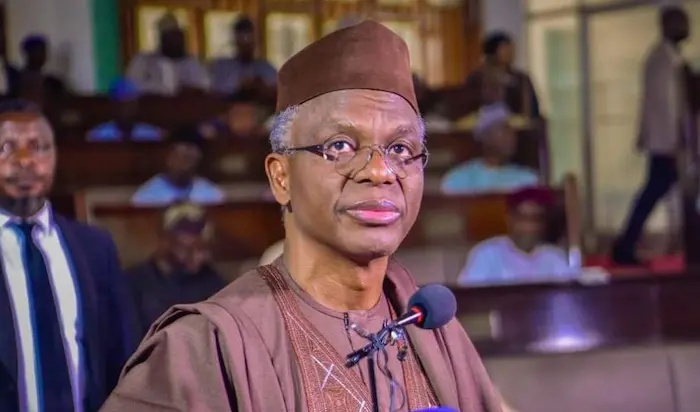
Former Kaduna State governor Nasir El-Rufai has shared a controversial article authored by Mohammed Bello Doka on his social media page.
The article raised concerns about what it describes as a possible pattern of political and institutional marginalisation of the Muslim North under President Bola Tinubu.
Doka claimed his earlier publication attracted insults, threats, and calls for his arrest.
He said the backlash followed his decision to ask questions others fear to raise.
According to him, remaining silent in such circumstances would amount to complicity.
The article revisited a key question: whether recent developments amount to a quiet political campaign against the Muslim North or are merely coincidental.
The author argued that responses to his question avoided substance and relied on attacks and deflection.
Doka highlighted what he describes as a consistent movement of power away from Northern Muslim figures.
He questioned why access to authority, protection, and influence appears to be narrowing for the same demographic group.
The article listed recent leadership changes involving Northern Muslim officials replaced by Northern Christians.
Examples cited include changes within the APC leadership, electoral administration, defence leadership, and Senate security oversight.
The author also referenced ongoing political discussions about potentially replacing Vice President Kashim Shettima ahead of the 2027 elections.
He questioned whether repeated discussions along similar lines could still be considered accidental.
The article pointed to media reports accusing several Northern Muslim figures of terrorism financing or corruption.
It noted that these remained allegations rather than convictions and raised concerns about the lack of legal resolution.
According to the article, the trend cuts across party lines, affecting figures from different political backgrounds.
Names mentioned include Nasir El-Rufai and Aminu Tambuwal, with investigations reportedly unresolved.
The piece also discussed the relocation of major government agencies and financial institutions to Lagos.
It argued that these moves further weaken Northern political and economic relevance.
The author connected institutional changes with worsening insecurity in Northern regions.
He suggested that instability may be reinforcing political vulnerability in the area.
Doka questioned why anti-corruption actions appear concentrated on specific individuals.
He contrasted this with other national scandals that allegedly received limited consequences.
The article ended by asking who within the Muslim North would remain politically secure if current trends continue and President Tinubu secures re-election in 2027.
Mohammed Bello Doka provided his email for public engagement.