The United States has called on Nigeria to strengthen measures aimed at protecting Christian communities, following a wave of abductions and attacks in parts of the country, particularly in Kaduna State.
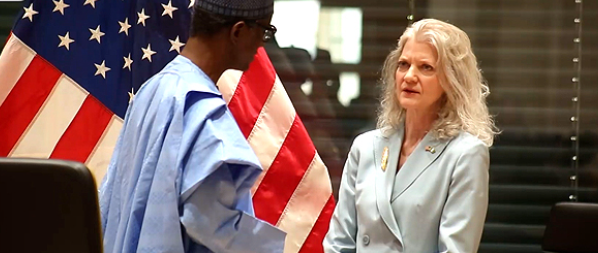
The appeal was made on Thursday in Abuja during a high-level meeting of the U.S.–Nigeria Joint Working Group on security.
The U.S. Under Secretary for Political Affairs, Allison Hooker, said that although Nigeria had recorded some gains in addressing insecurity, recent incidents showed that more decisive action was required.
Hooker acknowledged the release of dozens of abducted Christians in Kwara State and those taken from St. Mary’s Catholic School as positive developments.
She described the rescues as evidence that sustained engagement and cooperation between both countries could deliver results.
She, however, expressed concern over reports that more than 170 Christians were kidnapped in Kaduna State on January 18, stressing that such attacks underscored the urgency of improved protection for vulnerable communities.
She also urged Nigerian authorities to intensify collaboration with local governments and security agencies to secure the release of abducted victims, while also working with humanitarian organisations to support affected families.
According to her, ensuring religious freedom and safety would not only reduce violence but also strengthen broader U.S.–Nigeria relations in areas such as trade, economic development, healthcare cooperation, and counterterrorism.
The meeting brought together senior officials from both governments to review ongoing security efforts and explore ways to curb killings, forced displacement, and kidnappings, particularly in Nigeria’s North-Central region.
Hooker further said progress in safeguarding religious communities would help restore confidence, enable the return of internally displaced persons, and disrupt the flow of weapons and funding to extremist groups.
Responding on behalf of the Nigerian government, the National Security Adviser, Nuhu Ribadu, said the protection of all citizens, regardless of faith, remained a core priority of President Bola Tinubu’s administration.
He stated that the government had launched intensified joint security operations and deployed forces to areas experiencing repeated attacks on civilians and religious groups.
Ribadu disclosed that Nigeria was expanding early-warning and rapid-response systems and developing a national database to improve the accuracy of data on violence-related casualties.
He said the initiative would support better decision-making, enhance accountability, and strengthen the effectiveness of security responses.
He also noted that investigations and prosecutions linked to attacks on religious communities had been stepped up to ensure perpetrators were held accountable.
Describing Nigeria as a plural society, Ribadu said violence framed along religious lines was treated as an assault on the state itself.
“Our response combines security operations, the rule of law, humanitarian safeguards, and strategic communication,” he said, adding that the goal was to translate security gains into public confidence and stronger social cohesion.
Ribadu maintained that the U.S.–Nigeria partnership was yielding results and should be assessed based on long-term progress, institutional reforms, and the country’s growing capacity to prevent and punish violence.
He added that cooperation between both nations extended beyond security to include democratic governance, regional stability in West Africa, and efforts to prevent extremist groups from exploiting social and governance gaps.
The renewed focus on security cooperation follows public outrage over the abduction of worshippers in Kaduna State.
Initial denials by state authorities and the police, later reversed, drew criticism from religious leaders, including the Christian Association of Nigeria, which accused security agencies of eroding public trust through conflicting statements.
Nigeria and the United States formally deepened their security collaboration in November 2025, when President Tinubu approved Nigeria’s delegation to the Joint Working Group.
The body includes top officials from the defence, foreign affairs, interior, intelligence, and police sectors, and was established to strengthen coordination in tackling the country’s persistent security challenges.