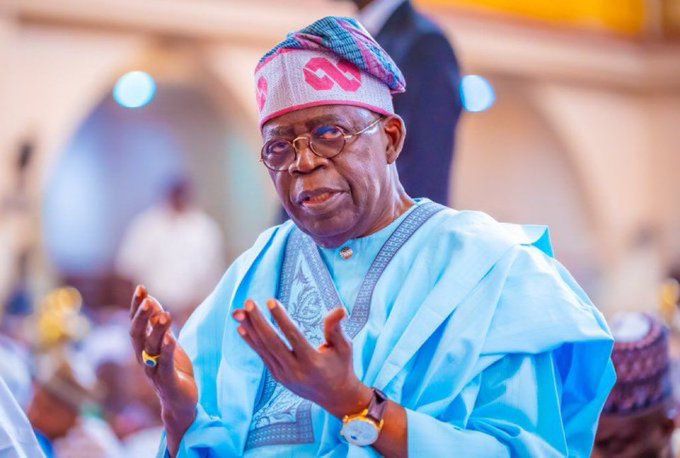
President Bola Tinubu has reaffirmed his administration’s commitment to protecting lives and property, announcing national security emergencies in areas identified as high-risk and vulnerable across Nigeria.
The President has directed intensified joint security operations and the sustained deployment of security forces to communities frequently targeted by attacks, particularly those affecting civilians and religious groups.
National Security Adviser (NSA) Mallam Nuhu Ribadu, echoing the President’s directive, emphasised that these measures were accompanied by tangible actions on the ground.
Speaking Thursday at the inauguration of the U.S.–Nigeria Joint Working Group in Abuja, Ribadu outlined plans to enhance Nigeria’s early-warning systems and rapid-response mechanisms.
He further revealed the creation of a national database intended to serve as a single, authoritative source for accurate and verifiable data on deaths and casualties from violent incidents.
Ribadu said the initiative would bolster evidence-based decision-making, strengthen accountability, and improve the overall effectiveness of security operations nationwide.
“Investigations and prosecutions targeting attacks on religious communities have been intensified to ensure that violence is addressed not only with force but also with justice and accountability,” he said.
Ribadu highlighted Nigeria’s diverse society, stating, “the protection of all citizens, Christians, Muslims, and adherents of other faiths, is non-negotiable.
”Violence against any religious group is an attack on the Nigerian state itself.”
He added that the government’s response combines security operations, rule of law enforcement, humanitarian protections, and strategic communication to build public confidence and social cohesion.
Progress, Ribadu noted, would be measured by the direction of security reforms, decisions from the highest levels of government, and institutional capacity to prevent, respond to, and punish violence.
The NSA also underscored the strategic partnership with the United States, which extends beyond security cooperation to democratic resilience, rule of law, and regional stability in West Africa.
In her remarks, U.S. Under Secretary for Political Affairs Allison Hooker acknowledged the broad-based cooperation between the two countries across trade, investment, security, energy, and regional stability.
She expressed concern over the January 18 abduction of more than 170 Christians in Kaduna State, urging Nigeria to strengthen protections for religious communities and ensure freedom of worship.
Hooker recalled Nigeria’s designation as a Country of Particular Concern in October 2025, noting that progress has been made in safeguarding vulnerable groups.
“I am here today to continue and expand that partnership,” she said, highlighting plans to focus on preventing violence, counter-terrorism, and accountability for perpetrators.
Minister of Information and National Orientation Mohammed Idris described the engagement as a demonstration of mature strategic collaboration built on trust and shared responsibility.
He pointed out operational gains from U.S.–Nigeria cooperation, including improved intelligence sharing and coordination between U.S. AFRICOM and the Nigerian military.
Idris added that the U.S. has pledged to deliver outstanding military equipment such as drones, helicopters, platforms, spare parts, and potential surplus defense support.