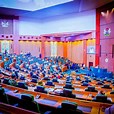
The Minority Caucus Ad-hoc Committee on Tax Laws in the House of Representatives has confirmed that unauthorised changes were made to some tax reform laws passed by the National Assembly and signed by President Bola Tinubu, raising serious concerns over legislative integrity and constitutional violations.
The committee disclosed this in an interim report released on Friday, following weeks of investigation into allegations that the versions of certain tax laws published in the official gazette differed from those approved by lawmakers.
The controversy began when a member of the House, Abdulsamad Dasuki, alerted lawmakers during plenary that an “authorised” version of the tax laws in circulation contained provisions that were never debated or passed by parliament.
His claims sparked public outrage and prompted the Minority Caucus to issue a statement on December 28, 2025, vowing to defend the independence of the legislature and Nigeria’s democratic institutions.
According to the caucus, presenting altered laws to the public amounts to a direct assault on the constitutional powers of the National Assembly, which is solely responsible for lawmaking.
In response, the Minority Caucus, led by Kingsley Chinda, constituted a seven-member fact-finding committee on January 2, 2026.
The committee is chaired by Afam Ogene and includes Aliyu Garu, Stanley Adedeji, Ibe Osonwa, Marie Ebikake, Shehu Fagge, and Gaza Jonathan.
Its mandate was to establish the facts surrounding the alleged manipulation of the tax reform laws.
The committee explained that following the allegations, the Speaker of the House, Abbas Tajudeen, ordered the immediate public release of Certified True Copies (CTCs) of the four tax reform Acts signed into law.
He also directed an internal verification process to preserve the credibility of the legislature.
The Acts involved are the Nigeria Tax Act, 2025; Nigeria Tax Administration Act, 2025; National Revenue Service (Establishment) Act, 2025; and the Joint Revenue Board (Establishment) Act, 2025.
The Clerk of the National Assembly was instructed to work with the Federal Government Printing Press to ensure consistency between the passed laws and the gazetted versions.
In its findings, the committee said a comparison between the CTCs released by the House and the gazetted documents already in circulation revealed clear discrepancies, particularly in the Nigeria Tax Administration Act, 2025.
It noted that at least three different versions of the Act were found, confirming that alterations had indeed occurred.
The panel described the situation as a serious procedural breach that encroaches on the constitutional authority of the National Assembly.
It warned that such actions undermine democracy and the doctrine of separation of powers.
Among the contentious changes identified were reductions in tax compliance reporting thresholds, which would expand the number of individuals and companies required to report.
The committee said the gazetted version lowered thresholds for individuals and companies beyond what lawmakers approved, effectively bringing more taxpayers into the tax net without legislative approval.
The report also highlighted newly introduced provisions requiring taxpayers to deposit 20 per cent of disputed tax amounts before appealing decisions of the Tax Appeal Tribunal.
These provisions, the committee said, were absent from the version passed by parliament.
Other alterations included expanded enforcement powers for tax authorities, such as arresting suspected tax offenders and selling seized assets without a court order.
The committee also faulted changes to the definition of federal taxes, noting that petroleum income tax and value-added tax were removed from the gazetted version despite being included in the law passed by lawmakers.
The panel also raised concerns over provisions mandating tax computations for petroleum operations in U.S. dollars, rather than in the currency of the transaction as approved by the National Assembly.
In the National Revenue Service (Establishment) Act, the committee observed that oversight provisions empowering the National Assembly to demand reports and ensure accountability were removed in the gazetted version, which it described as a blatant disregard for parliamentary oversight and democratic checks and balances.
Given the scale and gravity of the discrepancies, the committee concluded that the evidence uncovered so far justifies a deeper and more comprehensive investigation.
It has formally requested an extension of time to fully probe the matter and identify those responsible.
President Tinubu had assented to the four tax reform bills in June 2025, with the Presidency stating that the laws were designed to modernise tax administration, improve revenue generation, and enhance Nigeria’s investment climate.
However, the latest revelations have cast a shadow over the implementation process and sparked renewed debate over accountability in the legislative system.