The Federal Government has unveiled plans to comprehensively map Nigeria for expanded gas distribution while renewing its push for additional refineries to boost domestic supply and strengthen the country’s position as a petroleum products exporter.
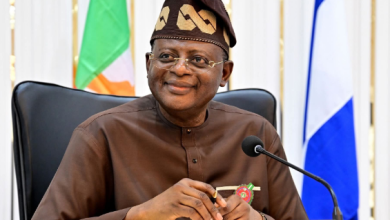
The initiative was disclosed by the Authority Chief Executive of the Nigerian Midstream and Downstream Petroleum Regulatory Authority (NMDPRA), Saidu Aliyu Mohammed, during the second and third days of his official tour of oil and gas facilities in Rivers State.
The three-day visit focused on engagement with operators across the midstream and downstream segments of the industry.
Mohammed said the government, through the NMDPRA, is undertaking a nationwide mapping exercise to support the structured allocation of Gas Distribution Licences and related network franchises.
According to him, the goal is to ensure an orderly and well-regulated expansion of gas infrastructure that meets both technical and commercial standards.
He explained that in areas not connected to gas transmission pipelines, the government would rely on virtual gas solutions, particularly compressed natural gas, to extend access.
Such operators, he noted, are central to the administration’s strategy to deepen gas utilisation and reduce dependence on more expensive and polluting energy sources.
The NMDPRA chief stressed that the facility visits were part of routine stakeholder engagement rather than enforcement actions, noting that the authority prioritises collaboration and compliance support.
Mohammed highlighted the role of gas distribution in lowering energy costs for industries, improving productivity, and easing pressure on consumer prices.
He also addressed concerns over rising gas prices, clarifying that pricing is not regulated by the authority and attributing high costs largely to supply shortages.
According to him, the agency’s responsibility is to ensure infrastructure standards and promote availability, arguing that increased supply would naturally moderate prices.
During the tour, Mohammed visited several facilities, including Stockgap Fuels Limited, where the company’s leadership commended the regulator for sustained engagement.
Similar visits were made to Axxela Gas Limited and facilities operated by Matrix, as part of efforts to strengthen collaboration with industry players.
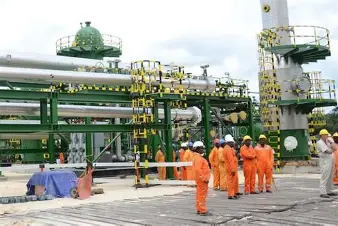
On the third day of the tour, attention shifted to refining capacity with a visit to Aradel Holdings’ 11,000 barrels-per-day refinery in Ogbele.
Mohammed said Nigeria needs significantly more refineries to meet long-term domestic demand and support export ambitions beyond its borders.
He stated that while new large-scale projects such as the Dangote refinery are important, they are not sufficient on their own.
According to him, Nigeria’s objective is not only to satisfy local demand but also to export refined petroleum products to other African countries and international markets once domestic needs are met.
Mohammed praised Aradel Holdings for demonstrating indigenous capacity in refining and energy development, describing the facility as a strong example of Nigerian content and private-sector participation.
He also reiterated the importance of reviving government-owned refineries, noting that the Port Harcourt, Warri, and Kaduna refineries remain under the responsibility of the Nigerian National Petroleum Company Limited.
He said restoring product transportation to key depots is critical to resuming regular loading and distribution.
The NMDPRA chief emphasised that both public and private refineries are vital to Nigeria’s energy security and that sustained investment in the midstream sector is essential for long-term stability.
In response, Aradel Holdings Chief Executive Adegbite Falade described the visit as a strong signal of regulatory support, noting that constructive engagement has helped operators expand capacity and contribute more effectively to national energy supply.
The Rivers State engagements, according to officials, reflect the Federal Government’s broader strategy to deepen gas utilisation, expand refining capacity, and strengthen cooperation between regulators and industry stakeholders to drive economic growth and energy sustainability.