The New Nigeria Peoples Party (NNPP) has criticised the defection of Kano State Governor Abba Kabir Yusuf to the All Progressives Congress (APC), describing the move as one driven by personal political survival rather than the interests of Kano residents.
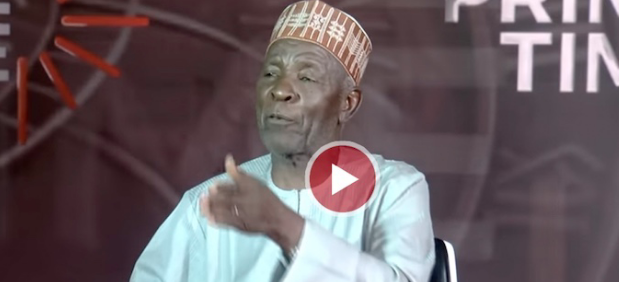
Speaking during an interview on Arise News on Tuesday, the Secretary of the NNPP Board of Trustees, Engr. Buba Galadima, said the governor’s decision signalled a major political rupture in Kano ahead of the 2027 general elections.
Galadima argued that Yusuf’s alignment with former governor Abdullahi Ganduje, a long-standing political adversary of NNPP leader Rabiu Musa Kwankwaso, amounted to a betrayal of the political structure that produced him as governor.
According to him, the decision neither promotes peace nor reflects the wishes of Kano voters.
He said the defection would have been less controversial if Yusuf had joined a party other than the APC, stressing that the move appeared calculated solely to protect his political future.
Galadima described the development as deeply painful for the NNPP leadership, noting that enormous sacrifices were made to secure Yusuf’s emergence as governor.
Recounting events surrounding Yusuf’s victory, Galadima said the NNPP leadership worked relentlessly during the election period and subsequent legal battles.
He credited former President Muhammadu Buhari with standing by the court process that eventually affirmed Yusuf’s mandate, describing the outcome as a combination of perseverance and divine intervention.
Galadima accused the governor of abandoning the principles and alliances that sustained his political rise, alleging that Yusuf lost confidence in the platform that brought him to power and chose instead to align with influential political figures to guarantee his future.
He dismissed claims that Yusuf only recently broke away from Kwankwaso’s influence, stating that signs of disengagement emerged shortly after Yusuf assumed office, despite public displays of loyalty.
According to Galadima, the NNPP deliberately refrained from reacting immediately, allowing the governor to publicly declare his defection.
He claimed the party has since gained sympathy from Kano residents, insisting that Yusuf has lost significant grassroots support and would struggle electorally if elections were held today.
Galadima said the public display of unity between Yusuf and Ganduje was particularly distressing, given their shared political roots in Kwankwaso’s movement.
He suggested that resentment over Kwankwaso’s popularity among ordinary people fueled the political realignment.
On Yusuf’s remarks about rejecting “blind loyalty,” Galadima said the statement was aimed at reassuring his new political allies rather than criticising Kwankwaso.
He further alleged that Yusuf was never truly committed to the NNPP, describing him as a beneficiary rather than a loyal party member, and claimed the governor had been working in the interest of the APC even before formally defecting.
Despite losing its only sitting governor, Galadima maintained that the NNPP would endure, expressing confidence that the party could rebuild as it had done before.
Turning to national politics, he accused President Bola Tinubu of consolidating power ahead of the 2027 elections, alleging the use of state institutions to pressure opposition figures.
He warned that electoral manipulation would not be tolerated, insisting that Nigerians would resist any attempt to undermine the democratic process.
Galadima reiterated that Nigeria’s political landscape has evolved and that public resistance would prevent a repeat of past electoral abuses.