The Federal Government has commenced the plotting of coordinates for disputed and newly drilled oil and gas wells across Nigeria, in a move aimed at resolving long-standing ownership disagreements among oil-producing states.
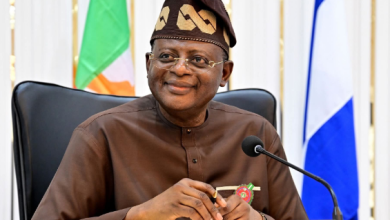
Chairman of the Revenue Mobilisation, Allocation and Fiscal Commission (RMAFC), Dr. Mohammed Shehu, disclosed this during the official flag-off of the exercise in Abuja, stating that the verification phase had already been completed by an inter-agency technical team.
According to Shehu, the next stage involves mapping the precise locations of the affected oil and gas assets, a process expected to clarify ownership claims and ensure that newly discovered resources are properly attributed to the states entitled to them.
He explained that the work is being carried out by an Inter-Agency Technical Committee (IATC) made up of representatives from the National Boundary Commission (NBC), the Office of the Surveyor-General of the Federation (OSGoF), the Nigerian Upstream Petroleum Regulatory Commission (NUPRC), and RMAFC.
The RMAFC chairman said the initiative was critical to upholding constitutional provisions on revenue sharing, particularly the requirement that oil-producing states receive 13 per cent derivation from mineral resources extracted within their territories.
“The constitution is clear that oil- and gas-producing states are entitled to 13 per cent derivation. Verifying and plotting the coordinates of new and disputed wells is therefore not optional, but a constitutional duty,” Shehu said.
He noted that the exercise covers all oil-producing states, including Akwa Ibom, Cross River, Bayelsa, Rivers, Delta and Ondo states, as well as offshore locations.
He added that disputes often emerge when new oil fields are discovered, as neighbouring states may lay overlapping claims.
According to him, factual data would ultimately determine ownership, including cases where assets may legitimately fall within shared boundaries.
To ensure transparency and credibility, Shehu said RMAFC conducted extensive fieldwork between September 2025 and January 2026, traversing creeks, offshore areas and high seas alongside surveyors-general from the affected states.
“We went to the field ourselves, and in locations that were inaccessible, drones were deployed to capture accurate coordinates,” he said, adding that representatives of the concerned states witnessed the data collection process.
Shehu assured stakeholders that the commission maintained strict neutrality throughout the exercise, pledging that RMAFC would continue to act as an impartial arbiter guided by fairness, equity and justice.
He expressed optimism that the outcome of the mapping exercise would significantly reduce disputes among oil-producing states and strengthen confidence in the derivation revenue system.
The RMAFC chairman also commended the Acting Chairman of the Crude Oil Monitoring Committee, Hon. Hakeem Amosu, and the Chairman of the Gas Monitoring Committee, Hon. Rabiu Garba, for their leadership and support, which he said contributed to the successful completion of the verification phase.
Earlier, the Secretary of the commission, Joseph Nwaze, described the initiative as a reflection of institutional commitment and effective inter-agency collaboration.
He said the exercise would further enhance trust in RMAFC’s role as a neutral body in revenue allocation and fiscal federalism.
Also speaking, RMAFC Director of the Crude Oil Department, Dr. Khadija Kumo, described the exercise as timely and vital to the future of energy governance in Nigeria.
Kumo noted that attention must now extend beyond crude output to efficiency and the broader contribution of oil and gas resources to economic development.
She urged sustained collaboration among stakeholders to promote data-driven and sustainable decision-making in the sector.