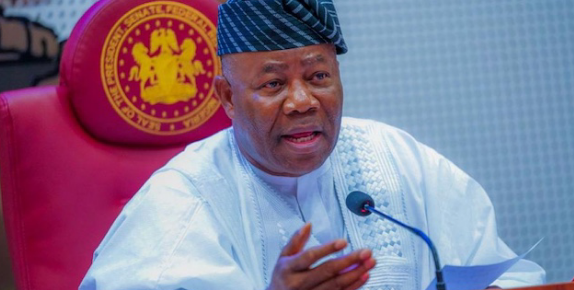
The President of the Senate, Senator Godswill Akpabio, has raised concerns over the circulation of unauthorised and altered copies of the recently passed Tax Reform Act, directing lawmakers to obtain only certified copies from the Office of the Clerk of the National Assembly.
Akpabio warned senators to ignore any versions in circulation outside the official channels, stressing that these do not reflect the provisions approved by both chambers of the National Assembly or assented to by the President.
“Certified copies issued by the Clerk are authentic, accurate, and free from any alteration.
”They represent the final and legally binding version of the legislation,” the Senate President stated.
The directive comes amid growing controversy over allegations that key provisions of the Tax Reform Act were altered after passage, sparking concerns about misinformation, misinterpretation, and potential abuse of the law at a time of heightened public scrutiny of fiscal reforms.
Following the warning, the Senate adjourned plenary, as lawmakers were urged to verify all documents before use.
The dispute deepened after the House of Representatives Minority Caucus set up a seven-member ad hoc fact-finding committee to investigate claims raised by lawmaker Abdusamad Dasuki.
Chaired by Hon. Afam Ogene, the committee reported that it had identified three different versions of the Nigeria Tax Administration Act, 2025 in circulation, with discrepancies between the version passed by the National Assembly and the one gazetted by the executive.
The committee’s preliminary findings suggested external tampering within the bureaucracy may have altered sections of the law after legislative approval.
Ogene clarified that the report did not indict the National Assembly but called for lawmakers to uphold accountability and protect legislative integrity.
However, the House leadership rejected the Minority Caucus report, arguing that only Speaker- or plenary-approved committees have constitutional authority to investigate legislative matters.
In a statement, spokesman Akintunde Rotimi described caucus-led inquiries as informal and non-binding, warning that their findings could mislead the public.
The leadership added that a bipartisan ad hoc committee, set up in December 2025, remains the official body investigating the matter.
In response, the Minority Caucus dismissed the House leadership’s position, cautioning that ignoring the interim report could encourage impunity and weaken trust in legislative processes.
The controversy has placed the National Assembly under pressure to clarify discrepancies between passed legislation and gazetted versions, with experts emphasising the need to safeguard democratic accountability and prevent potential manipulation of statutory laws.