The Federal Government has underscored the need for a fundamental shift from compliance-based local content policies to performance-driven frameworks that can deliver industrial growth and long-term competitiveness in Africa’s gas sector.
The Minister of State for Petroleum Resources (Gas), Dr Ekperikpe Ekpo, made this known on Monday in Abuja, at the pre-conference opening of the 2026 Nigeria International Energy Summit (NIES) dedicated for Local Content.
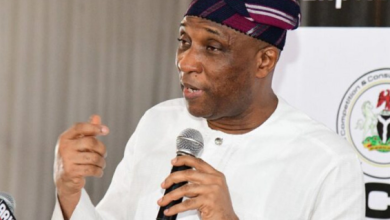
Ekpo, represented by Mrs Patience Oyekunle, Permanent Secretary, Ministry of Petroleum Resources said this at a session on “Local Content Beyond Compliance: Building African Industrial Powerhouses”.
The ninth NIES edition has its theme as “Energy for Peace and Prosperity: Securing our Shared Future”.
Ekpo said Africa’s vast gas resources presented the most immediate and inclusive pathway to economic diversification, industrialisation, and shared prosperity, particularly for Nigeria, where gas remained central to the Energy Transition Plan and broader industrial agenda.
He said while local content policies had increased indigenous participation over the years, they had not always resulted in globally competitive companies, advanced technological capacity, or deep value retention within African economies.
“Unlocking the full potential of gas requires a deliberate rethink of local content implementation across the entire gas value chain, including engineering, project execution, gas processing, pipeline construction, fabrication, gas-based manufacturing, and downstream utilisation.
“Performance-driven local content must focus on building indigenous companies that are productive, innovative, bankable, and export-ready, rather than merely meeting regulatory thresholds for contracts, labour, and ownership,” he said.
He further described gas as the backbone of Nigeria’s industrial future, citing opportunities in power generation, clean cooking, fertilisers, petrochemicals, methanol, and compressed natural gas for transportation.
According to him, all these offer significant prospects for job creation and regional integration.
To achieve this, the minister called for a new compact involving government, industry operators, financial institutions, and training and research institutions.
Ekpo said government must provide stable and coordinated policy signals, operators must embed capacity development into project design, while financial institutions must de-risk gas projects for indigenous firms.
He added that the academic and training institutions must align skills development with modern industry needs.
The minister said that properly implemented, local content could catalyse the emergence of African industrial champions capable of competing regionally and globally.
Ekpo urged the participants at the session to focus on practical frameworks, measurable outcomes, and scalable models that would position Africa as a leader in gas-based industrial development.
NAN