The Politics And Optics of Electronic Transmission of Election Results Chief Tony Onyima

The argument that real-time electronic transmission of election results is technically unfeasible in Nigeria collapses under the weight of evidence from the country’s own digital evolution.
Nigeria already processes financial and fiscal transactions at a scale and speed far greater than what would be required to transmit election results from polling units.
If the nation can securely move trillions of naira across millions of digital endpoints daily, it can certainly transmit vote totals in real time.
Consider the Point-of-Sale (PoS) revolution. In the first quarter of 2025 alone, according to CBN records, PoS transactions hit a record N10.45 trillion, a 209 per cent surge compared to the same period in 2024.
As of early 2025, about 5.9 million active PoS terminals were deployed nationwide, processing over N116 billion daily.
By August 2025, agents were handling roughly N4.9 billion per hour, N81.11 million per minute, and N1.35 million per second.
These are not theoretical projections; they are real-time financial flows occurring across urban centres, semi-urban communities, and rural markets.
The same mobile and broadband infrastructure that enables a tomato seller in a village market to receive instant payment can transmit a polling unit’s result sheet.
Beyond payments, Nigeria’s tax administration has gone digital at scale. The Nigeria Tax Administration Act (NTAA) 2025 introduced an Electronic Fiscal System (EFS) and mandatory e-invoicing for VAT-registered businesses.
Platforms such as TaxPro Max now enable real-time transaction reporting and automated reconciliation between bank payments and tax returns.
Automation has reduced human discretion, minimised manual errors, and strengthened transparency.
Studies show that digitalising tax systems in developing countries can increase revenue by 1–3 per cent of GDP without raising tax rates — a testament to the efficiency of technology-driven governance.
If real-time fiscal reporting can occur nationwide across thousands of businesses daily, transmitting electoral data essentially numerical entries from polling units — is technically modest by comparison.
The scale of Nigeria’s communications infrastructure further weakens the feasibility argument.
As of December 2025, active telephone subscriptions stood at 179.64 million, according to NCC, with a teledensity of 82.87 per cent.
This means that the overwhelming majority of adults have access to mobile connectivity.
The 2023 presidential election recorded 23,377,466 votes cast out of 93,522,272 registered voters.
Even if each polling unit transmitted results simultaneously, the total data volume would be negligible relative to the billions of naira transactions already moving per hour through digital channels.
Election result transmission involves kilobytes of structured data or compressed images — far lighter than encrypted financial transactions processed every second.
Critics often conflate logistical challenges with technical impossibility. Yes, there may be network stability issues in some remote areas.
Yet fintech operators, tax authorities, and telecom companies already address such challenges through redundancy systems, offline capture with later synchronisation, and multi-network failover mechanisms.
These solutions are standard in digital finance and can be adapted to electoral management. Technology does not require perfection; it requires systems designed for resilience.
The question, therefore, is not whether Nigeria can transmit election results electronically in real time. The infrastructure exists. The transaction capacity exists.
The digital literacy base exists. What remains is institutional will, system optimisation, and procedural safeguards.
Nigeria moves N1.35 million per second through PoS terminals. It reconciles tax payments instantly through electronic fiscal platforms. It connects nearly 180 million active mobile lines nationwide.
Therefore, transmitting polling unit results in real time is not a technological stretch; it is a logical extension of the capacities the country already deploys daily. Refusal to do so is all politics – apologies to Simon Komolafe.
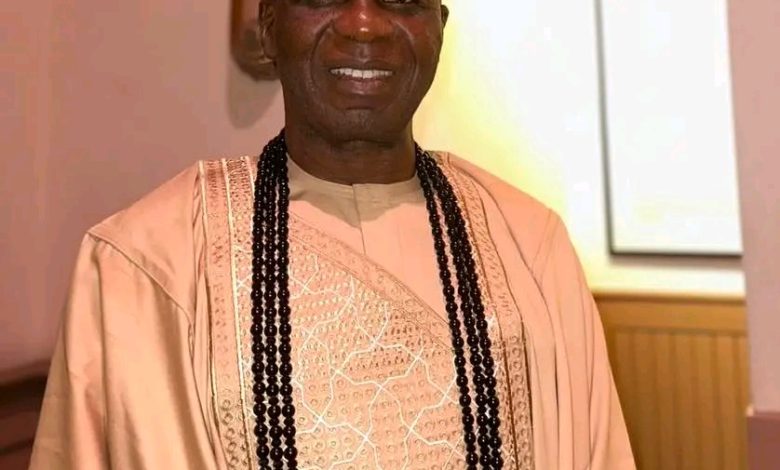
…Chief Tony Onyima, a respectable journalist, was a commissioner in Anambra State. He is also the national president of ThisDay Alumni Association.