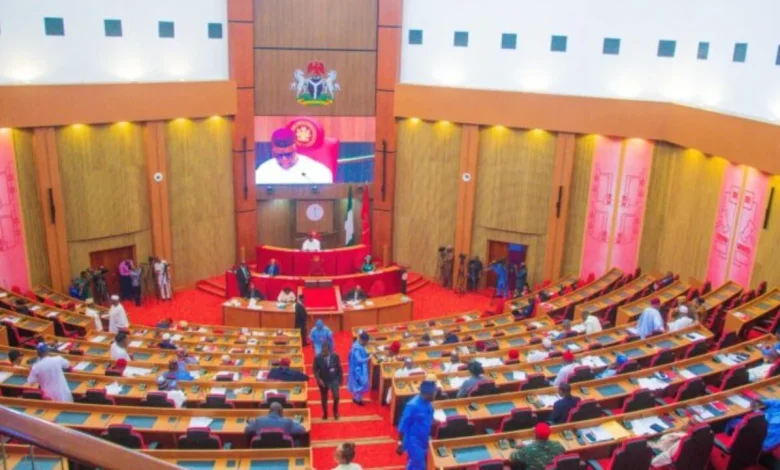
The Senate has warned that agencies benefiting from service-wide votes without accountability will face strict sanctions under the 2026 budget framework.
Chairman of the Senate Appropriations Committee, Adeola Olamilekan, issued the warning at a public hearing on the 2026 Appropriation Bill.
He said the 2026 budget represents a clear departure from previous spending habits across federal institutions.
Olamilekan stated that every budget line would undergo detailed examination to ensure prudent use of public funds.
He urged ministries, departments, and agencies to cooperate with oversight bodies to promote transparency and fiscal discipline.
The Senate also ruled out extending budget implementation beyond December 31, citing the need for proper planning and accountability.
According to the lawmaker, repeated budget extensions weaken fiscal control and distort government projections.
He identified the electricity sector as a major burden on public finances due to persistent subsidy payments.
Olamilekan said power sector reforms, including possible unbundling, are necessary to reduce recurring fiscal pressure.
He noted that electricity subsidies consume trillions of naira annually, limiting funds available for development.
The senator expressed concern over weak government revenue relative to the proposed 2026 budget.
He disclosed that the budget carries a deficit of N25.1 trillion, raising sustainability concerns.
Olamilekan said heavy debt servicing obligations inherited from past administrations have made continued borrowing unavoidable.
He explained that revenue inflows are irregular, while government obligations remain constant.
The lawmaker warned that failure to service debts could lead to downgrades by global financial institutions.
He said protecting Nigeria’s international credit rating remains a key priority.
To address the deficit, Olamilekan revealed plans to explore foreign financing options.
He added that the NNPCL leadership would be invited to clarify projected revenue contributions.
The Senate is also considering asset privatisation to raise funds for deficit financing.