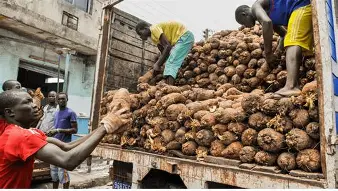
Nigeria continues to dominate global yam production, accounting for an estimated 67 per cent of the world’s output, the Federal Government announced on Thursday.
The nation produces approximately 67.2 million metric tonnes of yam annually, according to Senator Aliyu Abdullahi, Minister of State for Agriculture and Food Security.
Abdullahi revealed the figures at the National Yam Advocacy Summit, convened in Abuja by the International Institute of Tropical Agriculture (IITA) in collaboration with the Federal Ministry of Agriculture.
The summit, themed “Catalysing a National Agenda for Yam Value Chain Transformation and Improved Seed Technologies”, seeks to modernise the yam sector, boost productivity, and strengthen Nigeria’s position in domestic and international markets.
Despite the impressive production levels, the minister noted that the country still falls short of meeting the national demand of 120 million metric tonnes, leaving a shortfall of over 50 million metric tonnes.
“This gap highlights the sector’s untapped potential and the urgent need to modernise the yam value chain, enhance productivity, and leverage Nigeria’s leadership to capture greater market opportunities,” he said.
Abdullahi praised IITA for its pivotal role in strengthening the yam sector, emphasising the crop’s significance for rural enterprise, national resilience, and economic prosperity.
He said that agricultural transformation remains a priority under the Renewed Hope Agenda, noting that President Bola Tinubu in 2023 declared a State of Emergency on Food Security, calling for data-driven, coordinated interventions.
The minister highlighted the “Ramping Up Staple Crops Production for Renewed Hope Food Security” programme, launched in March 2025, which leverages mechanization, cluster-based farming, post-harvest loss reduction, and market integration.
Yam has been designated a Tier-1 crop, reflecting its nationwide importance and strategic role in food security and economic growth.
Abdullahi reaffirmed the ministry’s commitment to farmer training, extension services, access to finance, structured aggregation, mechanization, and value-added processing.
“Government alone cannot transform the yam sector. Success requires collaboration among ministries, research institutions, private investors, state governments, development partners, farmer cooperatives, and youth agripreneurs,” he stressed.
Echoing these sentiments, Abdoulaiye Tahirou, Deputy Director General of IITA, emphasised the need to scale up improved seed technologies to enhance productivity, promote livelihoods, and preserve natural resources.
“Yam is our crop, and only we can defend it and ensure it remains available for our people,” he said.
The summit ended with calls for strengthened partnerships and adoption of innovative approaches to unlock the full potential of Nigeria’s yam sector.