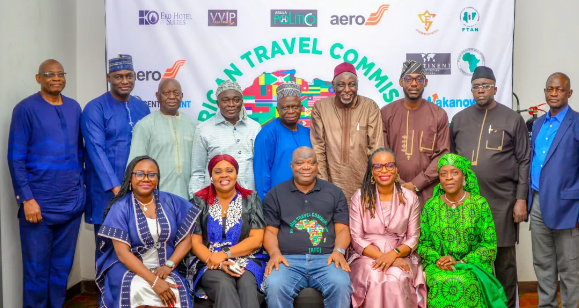
Stakeholders in Africa’s tourism sector have urged urgent reforms to visa policies, border restrictions, and air connectivity, while also calling for stronger public-private partnerships to accelerate the continent’s tourism growth.
The call came during the inaugural African Travel Commission (ATC) Summit and Exhibition, held at Eko Hotels and Suites in Lagos from February 11–12, 2026.
Themed “Accelerating Africa’s Tourism Growth Through Innovation, Partnerships and Sustainable Investments”, the event marked the first major continental gathering of the revived ATC since its registration as a non-profit organisation in Ghana in 2021.
Founded in 1965 by CEOs of national tourism organisations across Africa, the ATC has historically championed a unified voice for the continent in global tourism, playing a role in the creation of the World Tourism Organisation (now UN Tourism) and initiating the annual World Tourism Day celebrated on September 27.
During the two-day summit, delegates from government, private sector, and academia highlighted Africa’s vast yet underutilised tourism potential, pointing to the continent’s rich cultural heritage, diverse ecosystems, and thriving creative industries.
Despite these advantages, tourism remains a relatively small contributor to West Africa’s GDP, even as Africa as a whole generated around USD 225 billion in 2025, supporting nearly 30 million jobs.
Speakers at the summit identified key barriers to growth, including limited air connectivity, restrictive visa regimes, weak regional integration, and insufficient collaboration between governments and private tourism operators.
Six technical papers and four panel discussions explored innovation, partnerships, sustainable investment, and the role of tourism as a catalyst for regional integration and economic growth.
The participants emphasised the need for the ATC to lead continental research, maintain a comprehensive tourism statistics database, and develop training and capacity-building programmes for industry stakeholders.
At the conclusion of the event, delegates adopted several major resolutions, calling on African governments, regional economic communities, and the African Union to harmonise visa policies, reduce or eliminate visa fees for African travellers, and facilitate freer movement across the continent.
Rwanda, Kenya, and Ghana were specifically commended for already removing visa restrictions for African citizens.
The summit also recommended establishing a Nigerian national carrier to serve as a strategic hub for West Africa, alongside investments in aviation infrastructure and the expansion of intra-African air routes.
Governments and private stakeholders were urged to collaborate on tourism policy, joint investments, digital innovation, and skills development.
Participants further stressed that tourism should be positioned as a strategic tool for economic integration, encouraging regional blocs like the Economic Community of West African States (ECOWAS) to integrate tourism into development plans.
Nigeria was announced as the host of the 2027 ATC Summit and Exhibition, with dates to be confirmed by the ATC.
In its closing statement, the Commission reaffirmed its commitment to strengthening its role as a continental platform for tourism research, advocacy, and marketing, calling on governments, investors, airlines, and other stakeholders to support the implementation of summit resolutions to advance sustainable tourism across Africa.