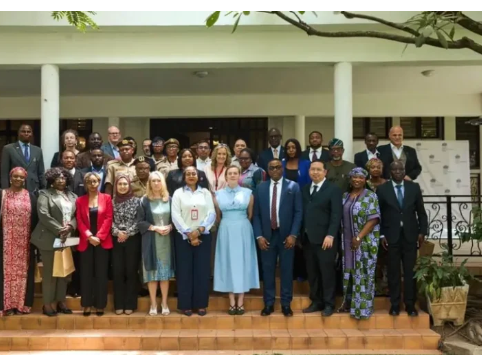
The British High Commission and the National Agency for the Prohibition of Trafficking in Persons (NAPTIP) on Monday issued a joint warning to Nigerians about fraudulent overseas job offers that are increasingly being used to traffic victims to scam centres in Southeast Asia.
The warning came during a survivor-focused event in Abuja themed: “Confronting the Global Scam Centre Crisis: Perspectives of Nigerian Survivors.”
Officials revealed that traffickers lure victims with promises of high-paying jobs, only to coerce them into working in cyber-fraud operations in countries including Myanmar, Laos, Cambodia, and Thailand.
British Deputy High Commissioner in Abuja, Gill Lever, said the UK is collaborating with Nigerian authorities to ensure survivors receive trauma-informed care and safe repatriation.
“We stand firmly with Nigeria and our African Commonwealth partners in addressing this rapidly evolving threat,” she stated, noting that global criminal networks defraud victims of more than $64 billion annually, with British citizens alone losing an estimated €11.4 billion in 2024.
NAPTIP’s Director of Public Enlightenment, Kehinde Akomolafe, emphasized that victims of such scams are trafficking survivors, not criminals, and called for increased awareness to protect Nigerians from falling prey to these operations.
The alert followed a recent rescue of 23 Nigerian victims in Thailand, coordinated by NAPTIP, the Ministry of Foreign Affairs, the Nigerian Embassy in Bangkok, and the British NGO EDEN.
Survivors recounted being forced to work up to 18 hours daily on online scams, enduring physical abuse, deprivation, and psychological trauma.
Some victims described being beaten, electrocuted, and denied food, with at least one death occurring in captivity.
Citing the United Nations Office of the High Commissioner for Human Rights (OHCHR), officials noted that over 120,000 people were currently held in scam centres in Myanmar, with more than 300,000 affected across Southeast Asia, representing 66 countries.
Between 2020 and 2025, approximately 74 per cent of victims were initially promised legitimate, high-paying employment before being trafficked.
The British High Commission and NAPTIP urged stronger international cooperation, public awareness, and survivor-focused approaches to dismantle criminal networks and ensure accountability for traffickers.