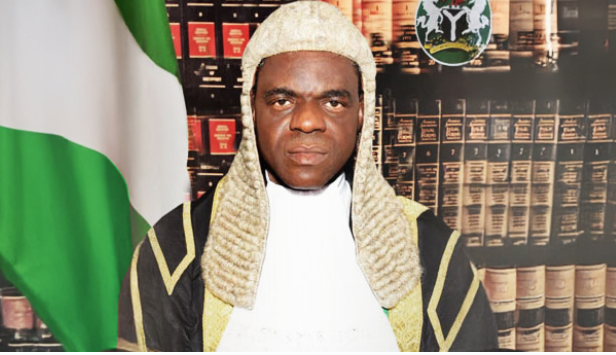
The Nigerian Bar Association (NBA) has formally challenged a reported summons issued to Honourable Justice John Tsoho, Chief Judge of the Federal High Court, by the Code of Conduct Bureau (CCB) over alleged undeclared bank accounts.
The NBA warned that such action risks undermining judicial independence and violates the constitutional principle of separation of powers.
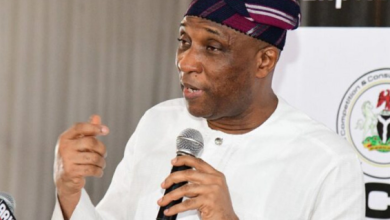
In a letter dated March 2, 2026, addressed to the Chairman of CCB, NBA President Mazi Afam Osigwe, SAN, argued that the bureau lacks the constitutional authority to summon a sitting chief judge.
The association stressed that under the 1999 Constitution (as amended), only the National Judicial Council (NJC) can investigate or discipline serving judicial officers.
The summons reportedly relates to allegations that Justice Tsoho failed to declare certain bank accounts in his asset declaration form, allegedly breaching the Code of Conduct for Public Officers.
The NBA described the matter as constitutionally troubling, noting that any disciplinary or investigative process bypassing NJC would contravene the separation of powers.
Citing the Supreme Court’s ruling in FRN v. Nganjiwa (2022) 17 NWLR Pt 1860 407, the NBA highlighted that the apex court affirmed NJC as “the ultimate guardian that guards the guardians of the constitution.”
According to the judgment, no criminal or quasi-criminal proceedings can be instituted against serving judges without prior NJC sanction, and any attempt otherwise is unconstitutional and null.
The NBA also referenced opinions from Justices Ogunwumiju and Agim, who emphasised that executive attempts to summon, arrest, or prosecute judges without NJC approval erode judicial independence and intimidate the judiciary.
The association insisted that the reported summons to Tsoho was more than an administrative request—it was the initiation of a process that could lead to sanctions, and thus constitutionally impermissible.
While the NBA acknowledged that allegations arising from purely private conduct could be handled directly by law enforcement, it stressed that any matter linked to the exercise of judicial functions or professional misconduct must first be assessed by NJC.
Consequently, the association urged the CCB to withdraw the summons and refer any concerns to NJC for proper investigation.
The NBA further recommended that the bureau digitalise its asset declaration system, creating a secure electronic portal to allow public officers to update prior declarations seamlessly, provide auditable records, automate reminders, and enhance transparency while safeguarding data integrity.
Copies of the letter were sent to the Chief Justice of Nigeria, the Attorney-General of the Federation and Minister of Justice, and Justice Tsoho himself.