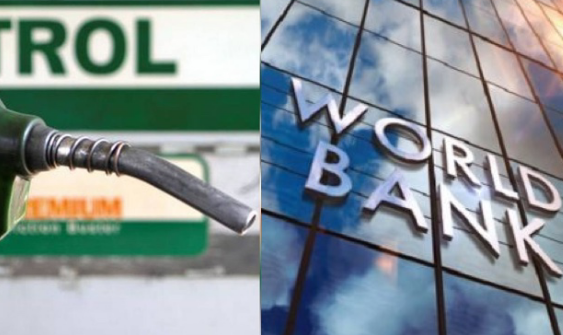
The World Bank has removed its latest Nigeria Development Update (NDU) report from its official website just days after publication, triggering questions over the decision even as the institution issued clarifications on some of its policy recommendations.
The report, titled “Nigeria’s Tomorrow Must Start Today: The Case for Early Childhood Development,” was released on April 7, 2026.
However, users attempting to access the document by Friday were met with a “page not found” message, indicating that the file had been taken down.
As of press time, the World Bank had not released an official explanation for the withdrawal of the April 2026 edition, leaving uncertainty over the circumstances behind the removal.
Despite this, the accompanying press statement remained accessible and continued to outline key findings on Nigeria’s economic trajectory and policy direction.
In a separate clarification, the institution addressed controversy surrounding its comments on petrol importation, stating that its recommendation regarding Premium Motor Spirit (PMS) should be interpreted within wider global and domestic energy considerations.
It explained that while it had suggested allowing petrol imports, such a policy could potentially conflict with efforts by various countries to strengthen energy security in the face of global supply disruptions.
The World Bank stressed that Nigeria’s immediate priority should be the reinforcement of targeted social protection systems to support vulnerable citizens.
It also indicated readiness to expand its assistance in that area.
“The World Bank Group stands ready to step up its existing support,” the institution said, emphasising the need for a strong social safety net capable of cushioning economic pressures on households.
The Bank further noted that, over the longer term, Nigeria could transition toward a more competitive retail petrol market.
However, it cautioned that such a shift must be carefully phased to ensure product quality, regulatory compliance, and overall market stability.
It also acknowledged ongoing efforts by both the Nigerian government and private sector stakeholders to stabilise fuel supply, describing these measures as important for safeguarding consumers and businesses.
“The World Bank Group recognises the efforts of the Government of Nigeria and the Nigerian private sector in taking concrete steps to safeguard fuel supply, a foundation that is essential to protect consumers and businesses,” the statement added.
Before its removal, the report had presented a cautiously positive assessment of Nigeria’s economic performance.
It estimated that the economy grew by about 4 per cent in 2025, while inflation eased to 15.1 per cent in February 2026, down from 26.3 per cent the previous year.
The improvement was linked to tighter monetary policy and improved food supply conditions.
The biannual publication, which assesses Nigeria’s economic and social trends, also suggested that early 2026 indicators pointed to continued growth across multiple sectors, despite pressures from global geopolitical tensions.