Iran on Thursday denied accusations that it attacked a South Korean cargo vessel in the Strait of Hormuz, as United States President Donald Trump declared that a peace agreement with Tehran remained “very possible” while warning that Washington could resume bombing operations if negotiations collapse.
The Iranian embassy in Seoul dismissed claims linking Tehran to an explosion aboard the Panama-flagged cargo ship HMM Namu, which caught fire on Monday while passing through the strategic Strait of Hormuz with 24 crew members onboard.
In a statement, the embassy said it “firmly rejects and categorically denies” allegations that Iranian forces were behind the incident.
Trump, however, alleged that Iran had “taken some shots” at the vessel and renewed calls for South Korea to support U.S.-led efforts aimed at restoring safe maritime passage through the strait.
The ongoing conflict, which began in late February following joint military action by the United States and Israel, has triggered widespread instability across the Middle East.
Iran retaliated with attacks across the region and tightened control around the Strait of Hormuz, disrupting global shipping routes and unsettling international energy markets.
Despite growing diplomatic activity, Tehran has yet to officially respond to a fresh proposal from Washington. Iranian negotiators have accused the US of attempting to force the Islamic republic into submission.
Still, hopes of renewed diplomacy have increased in recent days after Trump suspended a brief military campaign intended to reopen the vital shipping route, citing optimism that negotiations could succeed.
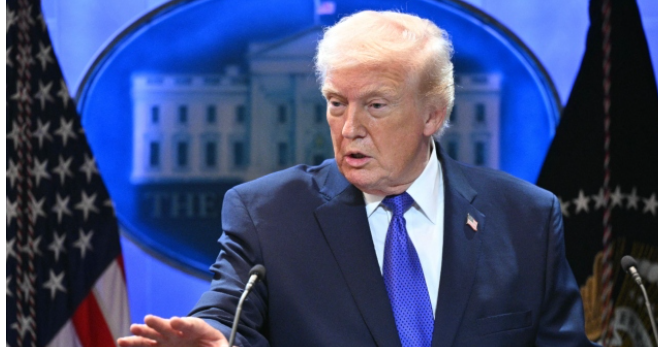
Speaking to reporters on Wednesday, Trump said discussions between both sides had progressed positively.
“We’ve had very good talks over the last 24 hours, and it’s very possible that we’ll make a deal,” he stated.
However, the U.S. president warned that military action could quickly resume if Iran failed to comply with understandings already reached.
He said bombing operations would continue “at a much higher level and intensity” should Tehran refuse to honour any agreement.
Iran’s Foreign Ministry spokesman, Esmaeil Baqaei, confirmed that the latest U.S. proposal was still “under review.”
He added that Tehran would relay its final position to Pakistan, which is acting as a mediator, after internal consultations are completed.
Iranian Parliament Speaker Mohammad Ghalibaf, who is overseeing the country’s negotiations, accused Washington of using pressure tactics designed to weaken Iran internally.
According to him, the U.S. seeks “through a naval blockade, economic pressure and media manipulation, to destroy the country’s cohesion in order to force us to surrender.”
American news outlet Axios, quoting unnamed officials, reported that both governments were nearing agreement on a one-page memorandum of understanding that could end the conflict and establish a framework for future nuclear negotiations.
Pakistan’s Prime Minister Shehbaz Sharif, whose government played a key role in early talks held in Islamabad, expressed optimism over the diplomatic momentum.
He said he was “very hopeful that the current momentum will lead to a lasting agreement that secures durable peace and stability for the region and beyond.”
French President Emmanuel Macron also intensified diplomatic engagement with Tehran during a phone conversation on Wednesday with Iranian President Masoud Pezeshkian.
Macron condemned attacks targeting civilian infrastructure in the United Arab Emirates and incidents involving commercial vessels near the Strait of Hormuz, describing them as “unjustified.”
The French leader urged all sides involved in the conflict to immediately end restrictions affecting maritime traffic in the strategic waterway.
Responding to Macron, Pezeshkian insisted that the full reopening of the strait would only be possible if the United States lifts its naval blockade.
According to the Iranian presidency, Pezeshkian argued that “excessive demands, threatening statements, and failure to adhere to necessary frameworks by the United States have further complicated the path of diplomacy.”
The diplomatic exchanges came as France deployed its aircraft carrier, Charles de Gaulle, through the Suez Canal toward the southern Red Sea.
The warship is expected to support preparations for a possible multinational mission focused on restoring navigation in the Strait of Hormuz.
A senior aide to Macron said the deployment was meant to demonstrate that France and its allies were prepared to secure the strategic passage if required.
“It sends a signal that not only are we ready to secure the Strait of Hormuz but that we are also capable of doing so,” the aide explained.
Macron and British Prime Minister Keir Starmer are currently leading the broader international initiative, with more than 40 countries reportedly participating in military planning discussions.
Financial markets responded positively to reports that the United States had paused escort operations in the Strait of Hormuz.
On Wall Street, both the S&P 500 and Nasdaq indexes closed at record highs, reflecting investor confidence that diplomatic efforts may prevent further escalation.
Asian markets also rallied strongly on Thursday, with Japan’s Nikkei index recording major gains. Oil prices, which had surged earlier in the week, remained lower amid expectations that a peace deal could reduce tensions in the Gulf region.
However, reactions inside Iran appeared divided.
A Tehran resident identified as Azadeh, a 43-year-old translator, told AFP journalists that the possibility of a deal involving Iran’s current leadership was deeply worrying.
“We’ve gone through so much hardship and suffering, and no achievements for the people?” she said.
“I honestly just hope they finish this regime.”
Meanwhile, hostilities continued on the Lebanese front as Israel launched fresh strikes on Beirut’s southern suburbs on Wednesday, marking the first such attack in nearly a month.
A source close to Hezbollah told AFP that a senior commander from the group’s elite Radwan force was killed during the operation.
Lebanon’s health ministry reported that at least 11 other people died in separate strikes across southern and eastern parts of the country.
The Israeli military later confirmed that four of its soldiers were wounded, including one critically, after what it described as an “explosive drone impact” in southern Lebanon on the previous day.