FG partially opens Lagos–Calabar coastal highway section …as procurement begins for new Carter

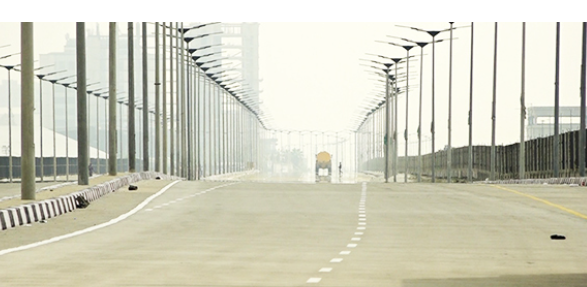
The Federal Government on Friday temporarily opened the first stretch of the Lagos–Calabar Coastal Highway, a major milestone in one of Nigeria’s most ambitious infrastructure projects.
It also announced the commencement of procurement processes for the construction of a new Carter Bridge in Lagos.
The 47-kilometre stretch, running from the Ahmadu Bello Way junction to the Eleko village axis, was unveiled during a brief ceremony attended by senior government officials, traditional rulers and community stakeholders.
The partial opening is aimed at easing traffic congestion along the Lekki–Ajah corridor, particularly during the festive season when traffic volumes typically surge.
Minister of Works, Senator Dave Umahi, who presided over the event, said the temporary opening fulfilled the Federal Government’s pledge to provide relief to motorists who have endured years of severe gridlock in the area.
He recalled that during an inspection visit in November, he had assured residents that Section One of the highway would be accessible between December 12 and 17, 2025.
“This opening is to ensure smoother movement during the Yuletide period while construction continues,” Umahi said, adding that full completion of Section One is projected for April 2026.
The Lagos–Calabar Coastal Highway, stretching approximately 700 kilometres, is designed to link nine coastal states — Lagos, Ogun, Ondo, Delta, Edo, Bayelsa, Rivers, Akwa Ibom and Cross River.
It is expected to significantly reduce travel time, boost economic activity and open up underserved coastal communities.
Approved by the Federal Executive Council in February 2024 and officially flagged off by President Bola Tinubu in May 2024, the project is estimated to cost about N4 billion per kilometre.
Despite public criticism over its cost and the demolition of properties along the route, the Federal Government has consistently defended the project as a long-term investment in national development.
Umahi had said the entire highway is scheduled for completion within eight years.
Community leaders and stakeholders present at Friday’s event expressed optimism that the project would stimulate economic growth and development across the coastal belt.
Speaking at the same event, Umahi announced that the Federal Government had begun procurement procedures for the construction of a new Carter Bridge in Lagos.
He explained that extensive technical assessments and stakeholder consultations had shown that replacing the existing bridge was the most viable option.
According to the minister, the Carter Bridge is structurally linked to the Iddo Bridge, which had previously collapsed, while rehabilitation work is currently ongoing on that structure.
“After careful technical evaluation and engagement with stakeholders, the conclusion is that a new bridge is required.
”The procurement process is underway, and we are moving in that direction in the interest of Lagos residents,” he said.
Umahi also provided updates on several other major infrastructure projects nationwide.
He disclosed that construction of the seventh axial road in Lagos, being handled by China Harbour Engineering Company and funded by the China Exim Bank at a cost of 266 million dollars, was progressing steadily.
He added that work on the 184-kilometre Ife–Ibadan–Ilesha concrete road, awarded to construction firm SPECC at a cost of N443 billion, had exceeded 20 per cent completion.
The minister further revealed that the 256-kilometre Ilesha–Akure–Benin road corridor had been assessed and found to be in poor condition, prompting the co-option of Hitech Construction Company Limited to execute the N756 billion project in phases.
On the ongoing repairs of the Third Mainland Bridge, Umahi urged residents to remain calm, explaining that the restriction to light traffic was necessary to allow extensive repair works above water.
He said procurement processes were also underway for underwater rehabilitation, which would extend the bridge’s lifespan by another 50 years.
The minister noted that the four legacy infrastructure projects initiated by President Tinubu’s administration were designed to benefit all regions of the country, reaffirming the government’s commitment to their completion.
He added that while the administration remained open to constructive criticism, it was recording significant progress.
“We are human and mistakes can happen, but our success rate is well above 95 per cent.
”The economy is recovering, and the government remains focused,” Umahi said.
Addressing security concerns, he expressed confidence that the country’s challenges would be overcome, noting that efforts by the current administration were already yielding positive results.