Christian elders urge Tinubu to champion new constitution ahead of 2027 polls

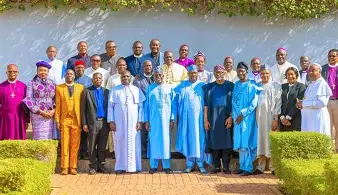
As political activities begin to gather momentum ahead of the 2027 general elections, elder statesmen under the aegis of the National Christian Elders Forum (NCEF) have called on President Bola Tinubu to commence the process of drafting a new constitution for Nigeria, declaring that the 1999 Constitution lacks legitimacy and no longer reflects the collective will of the people.
In an open letter addressed to the President and titled “Mr President, What Legacy Would You Leave Behind?” the group warned that proceeding with another round of elections under the current constitutional framework would amount to endorsing what it described as an illegitimate foundation for governance.
The letter was signed by the chairman of the forum and former Deputy Governor of Taraba State, Dr Samuel Danjuma Gani, along with other senior members of the NCEF.
According to the group, the 1999 Constitution was imposed on the country without broad-based consultation or consent, arguing that it was neither negotiated by Nigeria’s diverse ethnic nationalities nor produced through a properly constituted constituent assembly.
The elders contended that this process undermines the credibility of the document, particularly its opening declaration, “We the people,” which they described as misleading and untrue.
“The 1999 Constitution lacks legitimacy and should be decommissioned immediately,” the forum stated, adding that Nigeria should not continue to “validate an illegitimacy every four years” by conducting elections under the existing framework.
The NCEF urged President Tinubu to convene a national conference comprising representatives of Nigeria’s ethnic nationalities with a mandate to renegotiate the country’s political structure and produce a people-driven constitution before the 2027 elections.
According to the elders, such a process would provide a solid and consensual foundation for national unity, democracy and sustainable development.
In a section of the letter that is likely to generate debate, the forum also called on northern states to dismantle Sharia criminal law systems and revert to the Penal Code.
The group argued that Nigeria’s protracted insecurity, instability and social tensions are rooted in what it described as an ideological conflict between democratic governance and Sharia-based legal systems.
“The root cause of the crisis in Nigeria is the conflict between democracy and Sharia ideologies,” the elders said.
They maintained that Nigeria is constitutionally a secular state and warned that operating parallel legal systems within the same country has created deep contradictions and undermined national cohesion.
The forum further accused successive governments of allowing religion to exert undue influence over governance, alleging that religious bias has fueled violence and insecurity, particularly in parts of northern Nigeria and the Middle Belt.
It claimed that Christian communities in some areas have borne the brunt of such conflicts.
Appealing directly to the President, the elders urged Tinubu to rise above partisan or personal political considerations and focus on the long-term future of the country.
They described the present moment as one that demands courage and sacrifice from national leaders.
“As Christian elders, we appeal to President Bola Tinubu to think deeply about the legacy he would leave behind. This is a season that calls for sacrificial leadership,” the letter read.
The group argued that Nigeria’s current challenges present the President with a historic opportunity to distinguish himself as a statesman by initiating reforms that would endure beyond his time in office.
According to them, leaders who make difficult but principled decisions are the ones remembered positively by history.
“It is leaders who make sacrifices that posterity honours.
History etches in gold the names of those who make a difference for good in their generation,” the forum added.
The NCEF insisted that Nigeria should not conduct another general election under a constitution that does not emanate from the collective agreement of its people, arguing that only a legitimate, people-owned constitution could address the country’s longstanding political, social and security crises.