The conflict in the Middle East escalated sharply on Saturday as US President Donald Trump warned of intensified bombing in Iran, while Iranian President Masoud Pezeshkian declared the nation would never surrender.
The latest aerial strikes, coordinated with Israeli forces, targeted military facilities in Tehran, including a military academy, a missile storage site, and an underground command center.
Pre-dawn imagery from Mehrabad International Airport showed massive smoke and flames engulfing parts of the facility, highlighting the growing destruction of infrastructure in the capital.
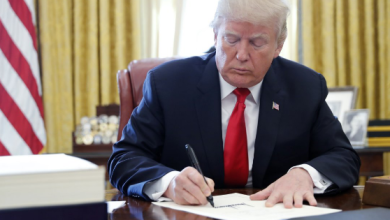
Posting on his Truth Social platform on Saturday, Trump said: “Today Iran will be hit very hard! Certain areas and groups previously spared are now under consideration for destruction due to Iran’s bad behavior.”
In a defiant state television address, President Pezeshkian warned that “enemies must take their wish for unconditional surrender of the Iranian people to their graves,” reaffirming Iran’s determination to resist external pressure.
Despite heavy bombardment, Iran demonstrated its capacity to retaliate with missile and drone strikes.
The conflict’s reach has spread beyond Iran.
Air raid sirens and explosions were reported in Jerusalem, Gulf cities including Dubai and Manama, and near Riyadh, where Saudi forces intercepted a ballistic missile fired toward a U.S. military base.
The UAE intercepted 15 missiles and 119 drones, though footage showed at least one projectile crashing near Dubai airport.
Jordanian officials also reported repeated Iranian missile and drone attacks targeting critical infrastructure over the past week.
Meanwhile, the Iranian Revolutionary Guards struck an oil tanker, Prima, in the Strait of Hormuz, reinforcing Tehran’s control over this strategic shipping lane.
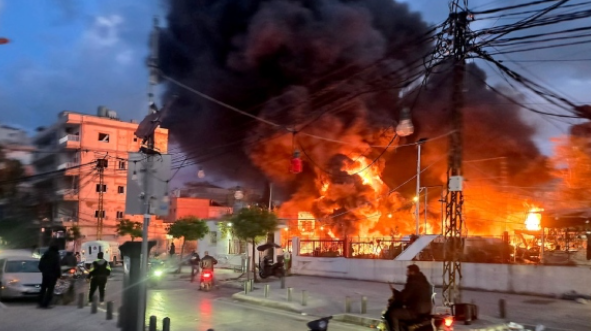
In Lebanon, Israeli airstrikes have intensified in Beirut’s southern suburbs, targeting areas controlled by the Iran-backed group Hezbollah.
At least 217 civilians have been reported killed in the past week, according to Lebanese health authorities, with thousands displaced and critical infrastructure damaged.
Inside Iran, residents in Tehran and other cities report increasing anxiety as the war damages residential buildings and disrupts daily life.
The Iranian Health Ministry estimates 926 dead and 6,000 injured, though these numbers remain unverified.
Survivors describe a climate of fear and uncertainty: “When you hear the bombs, you have no idea where they will hit,” said a 26-year-old teacher.
Global markets are reacting sharply, with crude oil prices surging and air travel disrupted worldwide.
Thousands of flights have been delayed or canceled, including international travelers stranded in Dubai.
While Iran’s allies, including Russia and China, have largely remained on the sidelines, Russian President Vladimir Putin urged an immediate ceasefire in talks with President Pezeshkian.
The U.S. Defense Secretary dismissed reports of Russian intelligence support for Iran as inconsequential.
Trump reiterated that the U.S. would only negotiate with Tehran if Iran installed a leadership figure acceptable to Washington.
Iran’s UN ambassador, Amir Saeid Iravani, rejected any foreign influence on the succession of leadership, asserting that Iran’s constitutional process would be strictly followed.
As the war enters its second week, the Middle East crisis continues to expand, with mounting civilian casualties, regional missile exchanges, and global economic disruption, highlighting the profound consequences of the U.S.-Iran-Israel confrontation.